Event 1
Earth–Axus Betrothal Treaty
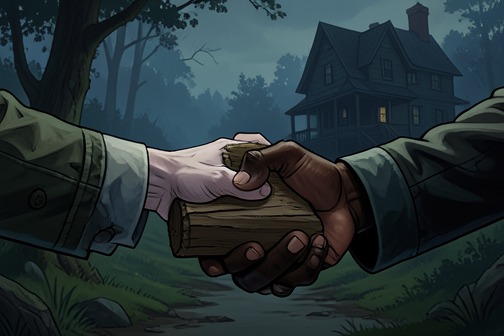
The [Earth–Axus Betrothal Treaty](entity:event-recall-event-earth-axus-betrothal-tr-0a8f696a971a) is the foundational political and personal agreement of the story. Made between [Hannah Delaney](entity:character-recall-character-hannah-delaney-7404d4ea4727) and Alvar, it promises Hannah’s unborn daughter to the king of [Underland](entity:location-recall-location-underland-0ae5be63779d) as his future wife and queen, supposedly securing peace between [Earth](entity:location-recall-location-earth-a6b883af9147) and the realms of [Axus](entity:location-recall-location-axus-0853a94a7e47). Its decisive force lies in the contradiction at its center: the treaty protects Earth from invasion while treating [Lucy Hammond](entity:character-recall-character-lucy-hammond-a91e8c60688a)’s life as the price of that protection.
## Formation and Terms
The agreement originates in a crisis before Lucy’s birth. Hannah tells Lucy that Alvar needed an Earth-human bride to preserve peace with his world, and that Lucy was expected to die in the womb. In return for saving her life through the healing abilities of his people, Hannah promised that the child she carried would belong to Alvar. The treaty therefore joins an act of rescue to a lifelong obligation, making Lucy’s survival inseparable from a commitment she never had the capacity to accept.
The written document gives this promise legal and religious authority. It is sworn to Elias, the God of Light, and dated October 10, 1993, on Earth, alongside the twenty-third day of [Havath](entity:time-recall-time-havath-a286f09ca258), 2918, on Axus. It identifies Hannah and King Alvar of Underland as the parties to the agreement and states that the female child Hannah carries will be betrothed to Alvar as his future wife and queen. The stated purpose is to secure a peace treaty between Earth and the realms of Axus.
The document also specifies the treaty’s practical provisions. Once the daughter reaches marriageable age, Alvar is entitled to return and retrieve Hannah and her daughter so they may reside in Underland. Underland must provide their material and personal needs, protection from the [Underland Guard](entity:organization-recall-organization-underland-guard-51e865821242), and instruction from the [Institute of Underland](entity:organization-recall-organization-institute-of-und-bdd4161c9a97) in the customs and ways of its people. Hannah’s signature and Alvar’s signature appear at the bottom, converting a private maternal promise into a formal transworld instrument.
## Political Purpose and Enforcement
Hannah explains that the treaty is not merely a marriage arrangement. Some people of Axus are hostile toward humans, while Alvar’s powerful kingdom is bound by treaties with the other countries of Axus. Because those powers will obey Alvar’s command not to attack, his marriage alliance with an Earth human is presented as a deterrent against war and conquest. The treaty thus makes Lucy a diplomatic guarantee: her status as Alvar’s bride is meant to stabilize relations that ordinary negotiation cannot secure.
The agreement’s political logic becomes most urgent when [Emily Hall](entity:character-recall-character-emily-hall-24560d2db105) is threatened with execution. Alvar tells Lucy that marriage can make the killing of Earth humans a crime under Underland authority and can compel [Remora](entity:character-recall-character-remora-8b4867a49865) to release Emily rather than risk war with him. He insists that the wedding must occur before Remora discovers that she has the wrong bride. Lucy’s forced choice is consequently structured as a life-or-death exchange: resistance may preserve her independence but leave Emily exposed, while compliance may save her friend and activate the treaty’s political protection.
The treaty operates within a wider and often brutal legal landscape. Alvar describes the gobli execution custom known as the [Star Wheel](entity:object-recall-object-star-wheel-f856c9d1117b), in which criminals are torn apart limb by limb before their heads are removed. The contrast between that punishment and the treaty’s promise to criminalize the killing of Earth humans shows how law changes according to jurisdiction and political power. The marriage is also required to appear publicly valid. A priest asks the couple to seal their union with a kiss before the gathered witnesses, while Alvar later explains that he must spend the night with Lucy because an old law requires the appearance of marital treatment for the rest of Axus to take the union seriously.
## Lucy’s Consent and Constraint
Lucy initially sees the treaty as an assault on the stable life she has chosen. Her engagement to [Mike Jones](entity:character-recall-character-mike-jones-7b35e9cb845a) represents a fresh start after an unstable childhood and a rebellion against the world in which she was raised. Mike offers friendship, comfort, and the possibility of a quiet marriage, even though Lucy recognizes that their relationship lacks passionate love. The discovery that Hannah promised her to Alvar before she was born turns that carefully arranged future into an apparent legal impossibility.
The treaty denies Lucy the ordinary powers of refusal. When she asks how to tell Mike and explain that she is already taken, Hannah replies that Lucy has been Alvar’s chosen bride for many years and that the agreement concerns only her. According to Hannah, rejecting the betrothal would be an insult to Alvar and his people and could provoke a war that Earth would likely lose. The language of choice remains present, but the consequences attached to refusal make the choice severely constrained.
Lucy’s resistance nevertheless remains active. She tells Alvar that she will marry him that night only because she needs to save Emily, and she explicitly refuses sex. Alvar accepts that boundary, promising that the couple will merely create the appearance that he is treating her as his wife while observing the old law requiring them to spend the night together. His restraint does not erase the coercive structure: Lucy is still being compelled into a ceremony by the danger facing her friend and by the treaty’s claim over her future.
The ceremony produces a revealing shift in Lucy’s response. She meets Alvar’s kiss partly to appear legitimate before possible spies for Remora, yet the contact also awakens an unexpected desire to linger. The treaty’s public performance therefore becomes more complicated than a purely political transaction. A gesture undertaken as evidence for outsiders begins to expose an attraction Lucy has not wanted to acknowledge, even as Alvar describes their possible marriage as a mutually beneficial arrangement grounded in his wealth, power, and position as a just ruler.
## Consequences for Alvar and Underland
For Alvar, the treaty establishes both responsibility and vulnerability. He is expected to produce a human queen in order to preserve peace, and he uses marriage as the legal means to protect Emily and deter hostile powers. Yet he also insists that he does not want to violate Lucy. His promise that he will never make her feel violated marks a distinction between the treaty’s institutional demands and his personal conduct, though the distinction remains unstable because he is the ruler who controls the institution enforcing the agreement.
The relationship later exposes how far Alvar has internalized the treaty as a business arrangement. He tells Lucy that he wants her happiness and does not want to ruin her as he has been ruined, adding that he had imagined their marriage, children, and political partnership as a practical arrangement rather than an emotional one. He also says that he is merely a [Cursed](entity:creature-recall-creature-cursed-d3440a3389c8) shell of a human being. Lucy rejects that self-condemnation and refuses to let [Saul](entity:character-recall-character-saul-115eb7cce44d)’s treatment define what Alvar can become. Her response begins to transform the treaty from an inherited obligation into a relationship that might acquire genuine mutual meaning.
The agreement also shapes the question of succession. [Sola Brightfeather](entity:character-recall-character-sola-brightfeather-a2d533027253) explains that once Lucy and Alvar’s heir reaches the age of twenty-five, the [Underland Council](entity:organization-recall-organization-underland-counci-e4594994fede) will judge whether the heir is worthy to succeed Alvar. The treaty therefore extends beyond the couple’s immediate marriage: it reaches into reproduction, dynastic continuity, and the future governance of Underland. Sola argues that Alvar has ruled for years without using his Cursed state to exploit the council or the people, and that it would be better to restore him than to send him away. The betrothal’s political consequences thus culminate not simply in a wedding but in a contested plan for legitimate rule.
## Narrative Significance
The Earth–Axus Betrothal Treaty is the story’s central mechanism for converting private history into public crisis. Lucy’s mother made the promise as an act of desperation, Alvar inherits it as a guarantee of peace, and Lucy experiences it as a claim imposed on her before consciousness or consent. That movement across generations gives the treaty its emotional force: the document is simultaneously evidence of a life saved, proof of a mother’s sacrifice, and an instrument that appears to erase the daughter’s right to choose.
Its conflicts also expose competing definitions of law. The treaty invokes Elias, royal authority, intergovernmental peace, marriage custom, public ceremony, and succession tradition, while Lucy measures it against bodily autonomy, emotional truth, and the right to refuse an unwanted future. Underland’s protections can make marriage politically necessary, but necessity does not make the arrangement freely chosen. The narrative repeatedly tests whether a contract created through fear can become ethical through later restraint, affection, and voluntary commitment.
By the later stages of the story, Lucy refuses to return immediately to Earth and chooses to see what Alvar has made of Axus through peace and restoration. She declares that Saul and the Curse should not be allowed to determine what Alvar is, and she recognizes the unity he has created among peoples who were once at war. This does not cancel the treaty’s coercive origin. Instead, it gives the old agreement a new and contested meaning: what began as a transaction imposed on an unborn child becomes the starting point from which Lucy and Alvar must decide whether political obligation can be remade as freely chosen partnership.
Event 2
Cursed Blood Infusion of Lucy Hammond
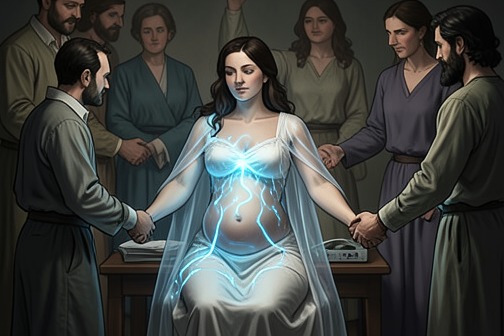
The [Cursed Blood Infusion of Lucy Hammond](entity:event-recall-event-cursed-blood-infusion-o-5764c86eba2a) is both a rescue and the origin of a lifelong entanglement. Alvar’s blood saved Lucy while she was still developing in her mother’s womb, but the treatment also made her a bearer of [Cursed blood](entity:state-recall-state-cursed-blood-b48c0883d199), tied her bodily future to [Underland](entity:location-recall-location-underland-0ae5be63779d)’s fears and traditions, and helped determine why she was treated as the uniquely suitable bride for Alvar’s political alliance. The infusion therefore turns a private medical crisis into the biological basis of a marriage agreement, a source of conflict over consent, and a recurring sign that survival in this story is never separate from obligation.
## The Infusion and Lucy’s Prenatal Survival
Lucy’s mother tells her that she promised Lucy to Alvar before Lucy was born. The promise arose because Lucy was expected to die in the womb, and Alvar possessed abilities capable of healing that [Earth](entity:location-recall-location-earth-a6b883af9147) humans did not have. Her mother sought a miracle from him and offered Lucy in marriage if he saved the unborn child. The arrangement was consequently founded on an exchange made before Lucy could consent: Alvar supplied the means of survival, while her mother pledged Lucy as his future bride.
The treatment is later identified more precisely as an infusion of Cursed blood into Lucy’s veins while she was still in the womb. Alvar explains that Cursed blood can heal a still-developing fetus and that this was the only way to save Lucy’s life at the time. The infusion did not transform her into a monster. Instead, it left her with a [Cursed](entity:creature-recall-creature-cursed-d3440a3389c8) condition that, as far as Alvar knows, grants her unusually rapid healing compared with most mortals. Lucy’s survival thus carries a visible contradiction: the blood associated with monstrosity and social terror is also the substance that allowed her to be born.
## Medical Consequences and Reproductive Significance
The infusion becomes newly significant when Alvar explains why Lucy is different from other possible Earth brides. His research, confirmed by multiple record keepers including [Father Ryland](entity:character-recall-character-father-ryland-e5be9c9d1623), establishes that Lucy can carry Alvar’s children without dying. Alvar’s previous experience has made pregnancy a source of guilt rather than simple dynastic hope: [Triss](entity:character-recall-character-triss-cdadfd79d101) died because she had no Cursed blood and Alvar impregnated her without understanding the dangers of Cursed pregnancies. He presents Lucy as the only person on Earth whom he knows with certainty to be compatible with him, while also acknowledging that not all of his future children would necessarily be Cursed.
This explanation changes the meaning of Lucy’s body within the political plot. Her blood is not merely a cure that belongs to the past; it becomes evidence used to justify her selection for the Earth–[Axus](entity:location-recall-location-axus-0853a94a7e47) treaty and to imagine a possible line of succession. Alvar insists that he does not need her to bear children, but the fact that her reproductive survival is treated as exceptional places medical knowledge, dynastic continuity, and marital expectation in the same frame. The infusion therefore supports both Lucy’s life and the system that claims authority over her future.
## Recurrence as Healing and Political Protection
The blood’s healing function returns after Lucy suffers a later crisis. When she wakes in pain and asks where Alvar is, her mother tells her that Alvar gave her his Cursed blood again and that she would not have survived without it. Lucy immediately connects this second rescue with the prenatal transfusion: the same person, and effectively the same extraordinary remedy, saved her twice at opposite ends of her life. The recurrence makes Alvar’s original intervention concrete rather than legendary. His blood is not only the explanation for Lucy’s birth but also an active means of preserving her when danger returns.
The infusion also acquires political force during the threat to [Emily Hall](entity:character-recall-character-emily-hall-24560d2db105). Alvar argues that sealing his marriage to Lucy is the only way to save Emily, because once the marriage is completed, killing Earth humans will become a crime against Underland and [Remora](entity:character-recall-character-remora-8b4867a49865) will not want war with him. Lucy accepts the ceremony under protest in order to protect her friend, explicitly refusing sex. Alvar agrees to give the appearance of treating her as his wife, while insisting that an old law requires him to spend the night with her so that the rest of Axus will take the marriage seriously. The blood-saving event therefore feeds into a structure in which Lucy’s survival is exchanged for diplomatic status, and her apparent consent is produced under immediate threat.
## Stigma, Trauma, and the Meaning of the Body
Lucy’s Cursed blood is surrounded by a culture that interprets bodily difference as danger. Alvar’s own mother was burned after priests and villagers discovered that she carried Cursed blood. Alvar fled after the discovery, then arrived too late to save her and saw only her charred body. This history explains why the blood is not a neutral medical resource in Underland: it can mark a person for execution, make pregnancy hazardous, and generate the fear that a body contains an inhuman curse.
Alvar’s shame is intensified by his history under [Saul](entity:character-recall-character-saul-115eb7cce44d). He describes being forced to perform sexual acts against his will and says that Saul used him, while some memories were erased from the Mystar so that he would not have to relive his degradation. His self-description as a Cursed shell reflects the same moral confusion that surrounds the blood: an imposed condition becomes treated as an essential identity, and coercion is mistaken for personal nature. Lucy’s response resists that logic. She embraces him, refuses to let the Curse or Saul define what he is, and points to the peace and restoration he has created across Axus. Her compassion does not erase the bodily history of the blood, but it contests the conclusion that Cursed flesh must produce evil.
The infusion’s social consequences are present even in smaller moments. When Alvar notices the red mark left on Lucy’s wrist by her rubber band, he mistakes the ordinary Earth object for a device used to punish or harm herself. His reaction reveals how unfamiliar bodily practices and medical assumptions are across their worlds. Lucy’s blood is likewise repeatedly interpreted through categories of danger, healing, reproduction, and punishment. The event’s importance lies partly in this struggle over naming: whether the blood signifies a monster, a patient, a survivor, a political resource, or a person whose body should remain her own.
## Narrative Significance
The Cursed Blood Infusion of Lucy Hammond is a delayed revelation that reorganizes the story’s central relationships. Lucy first learns that her mother promised her to Alvar, then discovers that the promise was made because Alvar saved her life, and later learns that the saving substance remains in her veins. What seemed like an irrational family secret becomes a chain of cause and effect joining prenatal illness, magical medicine, forced betrothal, royal diplomacy, reproductive risk, and repeated rescue.
The event also creates a powerful contrast between cure and curse. The blood preserves Lucy, yet it places her within the same feared category that destroyed Alvar’s mother and torments Alvar himself. It gives Lucy rapid healing while making her body politically valuable; it protects her from one form of death while narrowing the choices presented to her. By returning at the moment of Lucy’s later recovery, the infusion becomes a motif of survival through relationship, but the story keeps its ethical cost visible. Lucy is alive because of Alvar’s intervention, not because she freely entered the bargain built around it, and her eventual decision to remain with him must be distinguished from the prenatal promise that first bound them together.
Event 3
Discovery of the Bridge
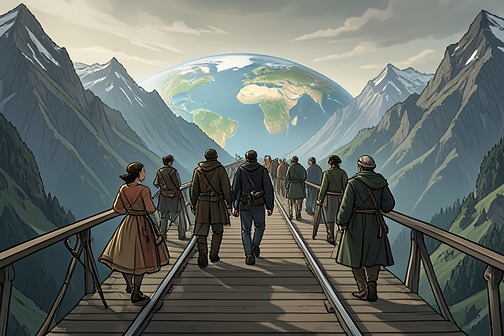
The [Discovery of the Bridge](entity:event-recall-event-discovery-of-the-bridge-bb232edfce24) is the event that connects [Earth](entity:location-recall-location-earth-a6b883af9147) with [Axus](entity:location-recall-location-axus-0853a94a7e47) and makes the two realms vulnerable to one another. It is not merely a route between worlds: it becomes the mechanism of political alliance, personal displacement, military exile, and renewed danger. Through it, Earth becomes a possible refuge for people of Axus, while Axus’s wars and dynastic obligations enter [Lucy Hammond](entity:character-recall-character-lucy-hammond-a91e8c60688a)’s life.
## Discovery and Political Consequences
[The Bridge](entity:location-recall-location-the-bridge-dd983998e080)’s discovery changes the balance between the realms. [Fletch](entity:character-recall-character-fletch-9cc58d19c69f) explains that Earth cannot simply be taken because the Bridge has been found, yet the discovery also creates a new temptation: people in Axus want to leave their world and begin again in Lucy Hammond’s. The passage therefore produces both restraint and instability. Alvar’s victory saved [Underland](entity:location-recall-location-underland-0ae5be63779d) and much of Axus, but rival factions still challenge his rule, and [Maggort](entity:character-recall-character-maggort-5de007588d55) supports the old, slave-based order associated with [Saul](entity:character-recall-character-saul-115eb7cce44d). The Bridge gives these disputes an interworld dimension rather than leaving them confined to Underland.
The discovery also makes possible the agreement between [Hannah Delaney](entity:character-recall-character-hannah-delaney-7404d4ea4727) and Alvar. Signed under oath to Elias on October 10, 1993, on Earth, and on the twenty-third day of [Havath](entity:time-recall-time-havath-a286f09ca258), 2918, on Axus, the agreement promises that Hannah’s unborn daughter will be betrothed to Alvar as his future wife and queen. Its stated purpose is to secure peace between Earth and the realms of Axus. Once the girl reaches marriageable age, Alvar is entitled to retrieve Hannah and her daughter for residence in Underland, where Underland will provide for their material and personal needs, protect them through the [Underland Guard](entity:organization-recall-organization-underland-guard-51e865821242), and instruct them through the [Institute of Underland](entity:organization-recall-organization-institute-of-und-bdd4161c9a97). The Bridge thus turns a diplomatic promise into a future claim over a human life.
## Passage and Transformation
The Bridge operates as a threshold that changes identity as much as location. When Alvar touches Lucy Hammond’s forehead with a glowing white crystal and embraces her, her world erupts into white oblivion. Cold carries her into a black space filled with passing lights before she emerges on Axus. The crossing is not presented as ordinary travel; it is a bodily rupture separating Lucy from the familiar world and placing her inside obligations she did not choose.
Her arrival is followed by a second form of transition. Fletch says that she must be dressed as a proper Underland beauty, and Lucy is led into a chapel-like space while her mother holds the train of her wedding dress. Hundreds of people wait for the ceremony. A priest blesses Lucy and Alvar, gives Alvar a gold goblet, and then hands it to Lucy so that she drinks the remainder. The priest asks them to seal the union before the gathered crowd with a kiss. The Bridge therefore leads directly into a marriage ritual that publicly converts an interworld treaty into a social and dynastic union.
## Exile, Return, and the Threat of Saul
The Bridge is also the means by which Saul is removed from Axus. Alvar explains that Saul was thrown into Lucy’s world through the Bridge because it was the only way to defeat him. Saul could not return without arlite, but Alvar warns that if he does return, both Axus and possibly Earth may be lost to him. The passage that once created contact between worlds consequently becomes a weapon of exile, while its continued availability leaves both realms exposed to renewed invasion.
This danger later governs Alvar’s public warning to Underland. He announces that the tyrant Saul is returning and will again attempt to oppress his people. Alvar admits that he cannot protect their families from the monster Saul controls, and the news produces terrified murmurs among those gathered in the chapel. The Bridge’s significance thus expands from historical discovery to an active strategic fault line: it has enabled Saul’s defeat, but it also makes his return imaginable and politically urgent.
## Passage, Marriage, and Social Order
The Bridge creates a chain of institutions and customs that reach across jurisdictions. Its discovery supports a peace treaty, the transfer of Lucy and Hannah to Underland, protection by the Underland Guard, instruction at the Institute of Underland, and Lucy’s incorporation into royal succession. The same interworld connection also exposes incompatible systems of law and violence. Alvar describes execution on the [Star Wheel](entity:object-recall-object-star-wheel-f856c9d1117b), where gobli criminals are torn apart limb by limb before decapitation, while Fletch describes [Goblia](entity:location-recall-location-goblia-951d9724eb1b)’s revived matriarchal order under [Remora](entity:character-recall-character-remora-8b4867a49865), in which only one female is permitted to live in a hive and female infants are destroyed unless selected as a future princess.
The consequences of the crossing are not limited to Lucy’s marriage. [Emily Hall](entity:character-recall-character-emily-hall-24560d2db105) later asks how they traveled from Earth to Axus, and Lucy identifies arlite as the means, specifying that it was a special kind. This exchange confirms that the journey depends on a material technology or substance unavailable through ordinary travel. The Bridge is therefore both a geographic threshold and a system whose operation must be explained, controlled, and contested.
## Continuing Significance
The Discovery of the Bridge remains decisive because every later arrangement between Earth and Axus is shaped by its existence. It prevents a simple conquest of Earth, enables the Earth–Axus marriage agreement, brings Lucy into Underland, provides Saul’s route of exile, and leaves open the possibility of his return. Even Alvar’s future as king is connected to the political consequences of this opening: [Sola Brightfeather](entity:character-recall-character-sola-brightfeather-a2d533027253) argues that Alvar should resume his duties, while the succession tradition requires a future heir to be judged by the council at the age of twenty-five.
As a narrative event, the Bridge marks the shift from separate worlds to a shared crisis. It promises escape to those oppressed in Axus, but it also carries coercion, war, and dynastic control across the same boundary. The passage creates connection without guaranteeing peace; instead, it makes every personal relationship and political decision answerable to two worlds at once.
Event 4
Lucy Hammond’s First Crossing to Axus

[Lucy Hammond’s First Crossing to Axus](entity:event-recall-event-lucy-hammond-s-first-cr-e148c26715d7) is the decisive threshold event of [Lucy Hammond](entity:character-recall-character-lucy-hammond-a91e8c60688a)’s story: Alvar abruptly takes her from [Earth](entity:location-recall-location-earth-a6b883af9147) through the Bridge and delivers her to [Underland](entity:location-recall-location-underland-0ae5be63779d), the southernmost country of [Axus](entity:location-recall-location-axus-0853a94a7e47) and his kingdom. The crossing is not a voluntary adventure or a ceremonial departure. It interrupts Lucy’s attempted future with [Mike Jones](entity:character-recall-character-mike-jones-7b35e9cb845a), separates her from [Emily Hall](entity:character-recall-character-emily-hall-24560d2db105) at a moment of danger, and makes the old Earth–Axus marriage agreement physically operative. Lucy arrives not merely in another world but in the political and emotional position of Alvar’s future queen.
## Causes and Background
Lucy begins the crossing while trying to build a stable life on Earth. Mike Jones, her fiancé, represents the quiet future she believes will rescue her from the instability and distress of her childhood. Their relationship is based on friendship, comfort, and mutual satisfaction rather than passionate love, yet Lucy has accepted his proposal because marriage promises a fresh start. Her resistance to intimacy with Mike exposes the weakness beneath that arrangement: she recognizes that she wants to remain his friend rather than become his lover, and therefore should not be marrying him.
The legal and dynastic cause of the crossing lies in a yellowed agreement signed by Lucy’s mother, [Hannah Delaney](entity:character-recall-character-hannah-delaney-7404d4ea4727), and Alvar. Sworn under Elias, the God of Light, and dated October 10, 1993 on Earth and the twenty-third day of [Havath](entity:time-recall-time-havath-a286f09ca258), 2918 on Axus, the agreement states that Hannah’s unborn daughter will be betrothed to King Alvar as his future wife and queen. The purpose is to secure peace between Earth and the realms of Axus. Once the daughter reaches marriageable age, Alvar is entitled to retrieve Hannah and her daughter for residence in Underland, where Underland will provide their material and personal needs, protection from the [Underland Guard](entity:organization-recall-organization-underland-guard-51e865821242), and instruction through the [Institute of Underland](entity:organization-recall-organization-institute-of-und-bdd4161c9a97) in the customs of its people. Lucy’s crossing therefore converts a hidden document into a lived obligation.
The immediate trigger is more violent. Lucy is seized while monsters are believed to be returning for her, and Alvar reaches her before she can understand what is happening. Despite her kicking and panic, he pulls her from the floor and tells her that they must go. He explains that she must leave earlier than expected and apologizes that she may not have had time to say goodbye. His urgency is linked to Emily Hall’s disappearance and to the threat posed by [Maggort](entity:character-recall-character-maggort-5de007588d55), a gobli lord from the mountains of [Ferar](entity:location-recall-location-ferar-b5266bb3ddbc) in [Goblia](entity:location-recall-location-goblia-951d9724eb1b), who seeks Lucy because he and the queen who sent him oppose peace.
## Passage Through the Bridge
Alvar’s method of transport makes the event bodily and immediate. He touches Lucy’s forehead with a glowing white crystal and wraps his arms around her. Her surroundings dissolve into white oblivion, while a rush of cold makes her cling to him for warmth. The pair then hangs suspended in a cold black space through which lights pass. The silence has no echo, and Lucy cannot orient herself by any familiar earthly sound or landscape.
Alvar identifies the space as the Bridge and tells Lucy that they are about to enter Underland. He insists that she hold him as tightly as possible because anyone lost in the Bridge is lost forever. His warning gives the crossing a literal mortal risk: the Bridge is not simply a convenient portal but an unstable passage in which separation means permanent disappearance. Lucy initially treats his demand for physical closeness with suspicion, reading it as a possible excuse to hold her. Alvar rejects that interpretation and presents the embrace as necessary protection, making the scene oscillate between coercion, distrust, and genuine dependence.
The passage ends when Alvar raises the crystal and a circular window appears ahead of them. Against the Bridge’s white space, the opening looks like a circle of darkness. He explains that Axus differs greatly from Earth but shares enough gravity and atmosphere that Lucy’s transition should not be too difficult. They then launch through the portal and fall together onto soft, velvety grass. The crossing thus concludes with a physical landing rather than a gradual arrival: the former world is left behind in an instant, and Lucy enters Axus through a fall that leaves her lying beside Alvar.
## Arrival in Underland
Lucy’s first sight of Axus establishes Underland as both strange and habitable. She and Alvar lie in a field beneath a clear purple night sky scattered with stars. Two moons shine above them: a lavender oval called Arlith and a white moon called Vesp, both named for goddesses of old. The air is lighter than Earth’s, and a warm breeze carries a pleasant mixture of fragrant spices and early-morning dew. These details contrast the frightening transit with a landscape of beauty, giving Lucy a first experience of Axus that is alien without being immediately hostile.
Alvar welcomes Lucy to Underland and identifies it as his kingdom. He also assigns her a future within it, telling her that she will be the mother of his children and his queen. The words transform the field from a place of arrival into the setting of a prescribed identity. Lucy’s awe at the moons and unfamiliar air is cut short by her memory of Emily’s screams, so wonder cannot become uncomplicated acceptance. Her first questions concern who Maggort is and why he wanted Emily and, by extension, her. Alvar’s answer places the crossing within a wider struggle over peace: Maggort is a gobli lord, and the queen who sent him also rejects peace.
The event therefore contains a sharp contrast between visual welcome and political danger. Underland is beautiful, but Lucy enters it under threat, without preparation, and with a friend left vulnerable behind her. The new world offers protection and a promised place, yet that offer is inseparable from dynastic expectations and Alvar’s authority.
## Immediate Consequences
The crossing rapidly produces a marriage rather than merely a change of location. Lucy is led into a chapel-like space by [Fletch](entity:character-recall-character-fletch-9cc58d19c69f) while her mother, Hannah Delaney, holds the train of her wedding dress. Hundreds of people are already seated, whispering and muttering as they await the ceremony, despite its short notice. Their presence makes Lucy’s private displacement public: she has crossed into Underland and is immediately displayed before a population prepared to witness her union with its king.
A human priestly figure blesses Alvar and gives him a gold goblet. Alvar drinks, then places the goblet in Lucy’s hands and instructs her to drink the rest. The ritual culminates in a public demand that they seal the union with a kiss. Lucy intends to appear legitimate before the gathered people, fearing that some may be spies for [Remora](entity:character-recall-character-remora-8b4867a49865), and she meets Alvar’s soft kiss rather than withdrawing. Her response is more complicated than political performance: the kiss awakens a desire to linger, and the moment feels unexpectedly natural to her. The crossing has consequently moved Lucy from resistance to an involuntary recognition of attraction, even though the surrounding marriage remains imposed by the old agreement and the emergency.
Alvar frames the marriage as an arrangement he can make advantageous. He promises not to violate Lucy and argues that they could have a wonderful arrangement because he is wealthy, powerful, and a just ruler who can give her anything she wants. He also points out that she is attracted to him. This language reveals the transactional structure inherited from the treaty: Lucy is offered material security, political status, and protection in exchange for becoming Alvar’s wife and queen. Yet the scene also shows the limits of that logic, because Lucy’s emotions are no longer fully contained by the practical bargain.
## Long-Term Significance
Lucy’s first crossing begins the central movement away from the stable but passionless future represented by Mike Jones. Much later, Mike acknowledges that Lucy need not return to Earth because she belongs with the person who awakened a passion he never received from her. His acceptance confirms the crossing’s lasting relational consequence: Lucy’s departure is not merely geographical but a rejection of the life she had chosen for safety.
For Alvar, the arrival initially appears to be a political solution, but it becomes a source of emotional conflict. He later tells Lucy that he wants her happiness and does not want to ruin her as he has been ruined. He had imagined the marriage as a business arrangement, not as a relationship in which genuine feeling might make him dangerous or inadequate. He even considers naming a successor who is not his own child so that Lucy can remain free, despite the customary and political pressure to produce an heir. The first crossing is thus the point at which a treaty-bound role begins to challenge Alvar’s belief that he is only a damaged, [Cursed](entity:creature-recall-creature-cursed-d3440a3389c8) shell.
The event also places Lucy within the public fate of Underland. Alvar eventually summons his people and announces that [Saul](entity:character-recall-character-saul-115eb7cce44d) is returning and that he may once again oppress them. He admits that he cannot protect their families as promised and presents his kingship as a facade because of the truth about what he is. The queen introduced through the Bridge therefore becomes part of a crisis involving royal legitimacy, public confession, and the survival of Underland.
Lucy’s passage has a ritual structure of separation, liminality, and attempted reintegration. She is torn from Earth, held in a silent interworld passage where ordinary identity and geography fail, and deposited in Underland where a wedding immediately gives her a new social position. The glowing crystal, the dangerous Bridge, the moons of Axus, the chapel, the goblet, and the public kiss form a chain of thresholds. Each one moves Lucy farther from the life she planned while binding her more closely to Alvar and to the political history she had not known existed. What begins as an emergency extraction becomes the foundation of her identity as Alvar’s queen and the opening movement of the larger conflict between Earth and Axus.
Event 5
Abduction of Emily Hall
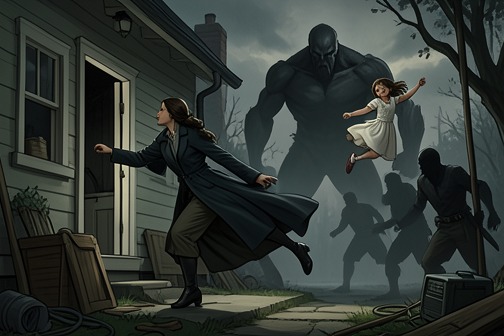
[Abduction of Emily Hall](entity:event-recall-event-abduction-of-emily-hall-3da7d6ba1340) is the decisive kidnapping that transforms [Lucy Hammond](entity:character-recall-character-lucy-hammond-a91e8c60688a)’s private crisis into an urgent conflict between [Earth](entity:location-recall-location-earth-a6b883af9147) and [Axus](entity:location-recall-location-axus-0853a94a7e47). Emily is seized from Lucy’s home by nonhuman attackers who mistake her for Alvar’s bride, and the mistake places her under the authority of [Remora](entity:character-recall-character-remora-8b4867a49865), the gobli queen. The abduction therefore does more than remove Lucy’s closest friend from the action: it turns an inherited political agreement into a threat measured in hours, with Emily’s execution held over Lucy as the price of refusing marriage to Alvar.
## Causes and Background
The abduction occurs while Lucy is trying to construct an ordinary future with [Mike Jones](entity:character-recall-character-mike-jones-7b35e9cb845a). Mike, her fiancé, represents a deliberate escape from the instability of her childhood and from the past she wants to bury. Their relationship offers friendship, comfort, and the promise of a quiet family life, even though Lucy recognizes that it lacks passionate desire. The discovery of the agreement signed by [Hannah Delaney](entity:character-recall-character-hannah-delaney-7404d4ea4727) and Alvar reveals why that past has returned: before Lucy’s birth, her mother promised that her daughter would be betrothed to the King of [Underland](entity:location-recall-location-underland-0ae5be63779d) in order to secure peace between Earth and the realms of Axus. The document also grants Alvar the right to retrieve Hannah and her daughter after the daughter comes of age, with residence, material support, protection by the [Underland Guard](entity:organization-recall-organization-underland-guard-51e865821242), and instruction from the [Institute of Underland](entity:organization-recall-organization-institute-of-und-bdd4161c9a97).
Lucy’s resistance is therefore not simple romantic hesitation. She knows that marrying Mike would defy Alvar, yet she does not want sexual intimacy with Mike and admits that she wants him as a friend rather than as a lover. The threat surrounding Emily intensifies this already unstable choice. Alvar presents himself as wealthy, powerful, and just, and proposes that Lucy could accept a favorable arrangement, but Lucy experiences that language as an attempt to reduce marriage, desire, and shared rule to an exchange of benefits. The abduction gives that abstract conflict a hostage and an immediate consequence.
## The Attack at Lucy’s House
The kidnapping begins with a breach of domestic safety. While Lucy and Emily are together, the sound of shattering glass from the bathroom makes them jump and scream. Someone has broken through the bathroom window, and the lights immediately flicker out, leaving Lucy unable to see in the darkness. The house is not invaded by a single hidden intruder; Lucy realizes that more than one person is present, which turns confusion into organized danger.
Lucy tries to reach the front door and call 911 on her phone. A scratchy male voice identifies the occupants as Earth humans and orders them not to do anything stupid. A second, deeper voice announces that it has found them, and Emily screams. When Lucy uses the phone’s light, she sees two large, twisted, monster-like creatures holding Emily by the arms. Emily resists and calls Lucy’s name, but one attacker orders her to come quietly as the bride of Alvar. The pointed teeth visible in the phone light make the captors’ nonhuman identity unmistakable, while their wording shows that they have come for a bride and believe Emily is the intended target.
The scene ends with a sudden flash of light. For only a moment Lucy sees the two menacing figures and Emily struggling between them; then the room goes dark again and all three vanish, much as Alvar had previously disappeared. Lucy reaches toward the empty space and grasps only air before tripping and dropping her phone. The abduction thus leaves no ordinary trail of escape. Its supernatural method links it directly to the inter-realm movement already associated with Alvar and makes the boundary between Lucy’s Earth home and Axus physically unstable.
## The Mistaken Bride and the Threat of Execution
The attackers’ mistake is central to the event. They call Emily the bride of Alvar, although Lucy is the woman bound to him by the treaty. Emily is consequently abducted because she is taken for Lucy, not because she is independently chosen as a political subject. The error briefly displaces the treaty’s burden from Lucy onto her friend, but it does not remove the danger; once the captors discover that Emily is not the true bride, the mistake becomes the basis for a harsher threat.
Alvar later tells Lucy that Emily has been handed into the custody of Remora, the gobli queen, after the gobli have realized that she is not the real bride of Alvar. He explains that Lucy and Alvar must marry immediately or Emily will be executed the following morning. The time limit changes the moral structure of Lucy’s decision. Marriage is no longer only a question of inherited obligation, attraction, political peace, or personal freedom. Refusal now appears to carry a direct death sentence for Emily, making Lucy’s choice a sacrifice demanded by another society’s power over her friend.
The proposed execution is not an empty threat. Alvar explains that gobli criminals are torn apart on a [Star Wheel](entity:object-recall-object-star-wheel-f856c9d1117b), with their limbs pulled off one at a time before the head. His unemotional description horrifies Lucy and also forces her to confront how accustomed he is to violence. The Star Wheel functions as the abduction’s most brutal consequence: Emily’s capture is converted into a public ritual of bodily destruction, and the pressure on Lucy depends on her believing that Remora’s authority will carry it out.
## [Goblia](entity:location-recall-location-goblia-951d9724eb1b), Remora, and the Political System Behind the Crisis
The danger to Emily is rooted in Goblia’s political and religious order rather than in an isolated act of personal cruelty. [Fletch](entity:character-recall-character-fletch-9cc58d19c69f) explains that Remora is the mother of the gobli hive and that only one female is permitted to live in a gobli hive at a time. The system derives from a religion centered on a Great Matriarch goddess. Most male drones die in infancy, female babies are destroyed unless Remora chooses one to preserve as a princess, and Remora lays about ten eggs each week to replenish the hive’s future population.
Fletch also places this order within the history of [Saul](entity:character-recall-character-saul-115eb7cce44d)’s tyranny. Saul helped install Remora as queen and promoted the old ways, apparently to weaken the last organized gobli city. Before that, Goblia had consisted of family clans and remained matriarchal without reducing society to a single living female. Saul had enslaved the gobli to work in his mines, and Remora’s appointment did not genuinely free them. Emily’s abduction therefore brings Lucy into contact with the lingering political architecture of Saul’s rule: enslavement, manipulated leadership, religious absolutism, and punishment survive even where the language of liberation has been used to disguise them.
## Consequences and Aftermath
The immediate consequence is Lucy’s forced wedding to Alvar. The priest publicly asks the gathered witnesses to seal the union with a kiss, and Lucy cooperates because she wants to appear legitimate in front of possible spies for Remora. The kiss is staged as political proof, but Lucy’s response is not emotionally empty: when Alvar leans in, she meets him, closes her eyes, and feels an intense desire to linger. Emily’s abduction thus produces a value reversal. A marriage Lucy had resisted as coercive becomes outwardly necessary for survival, while the public ritual unexpectedly exposes the attraction Lucy had been trying to deny.
Alvar insists that he will not violate Lucy and promises that he will have her love him rather than force her. He describes the possible marriage as a favorable arrangement supported by his wealth, power, and position as a just ruler, yet Lucy rejects the implication that attraction to him could be purchased. The abduction makes their relationship ethically unstable: Alvar is both the person whose bride Lucy is required to become and the person who can offer the only immediate route to Emily’s survival. His later confession that he does not want to ruin Lucy as Saul ruined him, and that he sees himself as nothing but a [Cursed](entity:creature-recall-creature-cursed-d3440a3389c8) shell, reveals how deeply the crisis is entangled with his own history of coercion and damage.
Emily’s removal also clarifies Lucy’s relationship with Mike. Lucy had treated Mike as a promise of stability, but her forced choice reveals that the comfortable arrangement cannot contain the intensity of her attachment to Alvar or the danger now surrounding her. When Lucy eventually tells Mike enough of the truth for him to understand that she is not a madwoman, he recognizes that she belongs with the person who awakened passion in her. He accepts that she had never felt the same way with him and does not ask her to return. Emily’s abduction consequently contributes to the dissolution of Lucy’s Earth-based future, even though Mike’s response is marked by understanding rather than revenge.
The event also extends beyond the immediate rescue bargain into the future political order of Underland. [Sola Brightfeather](entity:character-recall-character-sola-brightfeather-a2d533027253) later supports Alvar’s restoration, arguing that he ruled for years without using his Cursed state against his subjects and that the realm would be better served by allowing him to resume his duties. She explains that a future heir will be judged by the council at the age of twenty-five, while Lord Vessin argues that a weapon capable of killing a Cursed must be forged so that Underland is never defenseless again. The abduction’s aftermath therefore helps move the story from personal rescue toward questions of succession, royal legitimacy, military protection, and whether Alvar’s exceptional condition can coexist with accountable rule.
## Narrative Significance
As a dramatic event, Abduction of Emily Hall combines mistaken identity, rescue, sacrifice, and forced alliance. Its agents are the gobli attackers and Remora’s regime; Emily is the endangered victim; Lucy is the person whose decision can determine whether the victim lives; and Alvar is the intermediary who knows the political terms of the threat. That arrangement creates a conflict in which the value of friendship is placed against bodily autonomy and inherited diplomatic obligation.
The abduction also serves as the story’s threshold between ordinary domestic life and the larger world of Axus. It begins in a bathroom window and a failed emergency call, then ends in disappearance through a flash of light, placing alien power inside Lucy’s home before she has accepted that the treaty governs her life. Its most lasting revelation is that Lucy cannot return to stability simply by ignoring her past: the old agreement has living claimants, the realms treat her marriage as a political instrument, and Emily’s safety can be weaponized against her. By forcing Lucy to act, the event converts reluctance into commitment and makes the later emotional truth of her marriage inseparable from the violence that first compelled its public beginning.
Event 6
Wedding of Lucy Hammond and Alvar
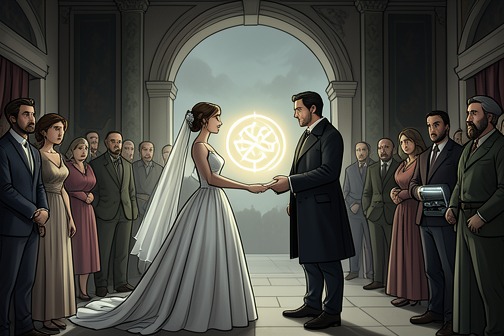
[Wedding of Lucy Hammond and Alvar](entity:event-recall-event-wedding-of-lucy-hammond-c6cb532ff4e3) is the decisive ceremony through which an old [Earth](entity:location-recall-location-earth-a6b883af9147)–[Axus](entity:location-recall-location-axus-0853a94a7e47) peace agreement becomes a lived political and intimate reality. Held with almost no preparation after Alvar brings Lucy’s mother across the Bridge and learns that [Emily Hall](entity:character-recall-character-emily-hall-24560d2db105) faces execution, the wedding binds Lucy to Alvar as queen while Lucy is still struggling to distinguish duty, fear, attraction, and love. Its public ritual gives legitimacy to the alliance, but its emotional force comes from the contradiction between Lucy’s restricted choices and the unmistakable desire she experiences when Alvar kisses her.
## Contract and Urgent Circumstances
The marriage has been prepared long before Lucy understands it. A yellowed agreement, dated October 10, 1993 on Earth and the twenty-third day of [Havath](entity:time-recall-time-havath-a286f09ca258), 2918 on Axus, records an oath to Elias, the God of Light, between [Hannah Delaney](entity:character-recall-character-hannah-delaney-7404d4ea4727) and King Alvar of [Underland](entity:location-recall-location-underland-0ae5be63779d). It promises that Hannah’s unborn daughter will be betrothed to Alvar as his future wife and queen, securing peace between Earth and the realms of Axus. Once the daughter reaches marriageable age, Alvar is entitled to retrieve Hannah and her daughter for residence in Underland, with their material and personal needs supplied, protection from the [Underland Guard](entity:organization-recall-organization-underland-guard-51e865821242), and instruction from the [Institute of Underland](entity:organization-recall-organization-institute-of-und-bdd4161c9a97) in local customs. Hannah’s signature and Alvar’s signature make Lucy’s future appear to have been settled before she could consent to it.
The immediate cause of the wedding is more coercive still. Alvar tells Lucy that he brought her mother across the Bridge because the ceremony is that night. Emily Hall’s fate supplies the pressure behind the compressed schedule: unless Lucy proceeds, her friend may be subjected to [Gobli](entity:creature-recall-creature-gobli-b7dd0ac07ede) execution. The method is the [Star Wheel](entity:object-recall-object-star-wheel-f856c9d1117b), on which criminals are torn apart limb by limb before their heads are removed. The wedding therefore begins under a double burden. It fulfills a diplomatic contract, yet it is also presented as the price of preventing a brutal death, leaving Lucy little time to think, plan, or say farewell.
## Ceremony in Underland
The ceremony takes place in a chapel-like space reached by stairs, where Lucy’s mother holds the train of her wedding dress as [Fletch](entity:character-recall-character-fletch-9cc58d19c69f) leads her forward. Hundreds of witnesses fill the room, their whispers and muttering forming a low rumble before the wedding begins. The assembly is unusually diverse: humans sit beside sylphs, a few gobli, and deer-featured, cloven-toed people resembling fauns. The gathering turns the marriage into a social and interspecies spectacle rather than a private exchange between two people.
Alvar presides at the front of the chapel as the master of the room. He wears a white doublet and white slacks that glow in arlite, a visual contrast to the danger and secrecy surrounding the event. A lovely melody rises from the gathered voices while Lucy is directed down the aisle by her mother and sylph attendants. The brightness of the clothing, music, and formal setting gives the ceremony a sacred appearance, even though the circumstances beneath it include threat, political calculation, and the fear that [Remora](entity:character-recall-character-remora-8b4867a49865) may have spies among the witnesses.
A human priest stands above Alvar on a small platform, raises his arms in apparent blessing, and gives Alvar a gold goblet. Alvar drinks first, then passes the goblet to Lucy and quietly instructs her to drink the remainder. Lucy complies because there is no meaningful alternative. The exchange functions as the ceremony’s shared act, joining them before the assembled population while also emphasizing how closely ritual participation is tied to obedience.
The priest then asks the couple to seal the union with a kiss in front of everyone gathered. Lucy decides to meet Alvar’s kiss so that the marriage will appear legitimate, particularly in case witnesses are secretly connected to Remora. Yet the gesture exceeds its political purpose. When Alvar leans in and kisses her softly, Lucy closes her eyes and feels an overwhelming desire to linger, experiencing his lips as both deeply pleasurable and disturbingly right. She withdraws with him only after the witnesses applaud, leaving the public performance charged with a private response she cannot comfortably deny.
## Political and Social Stakes
The wedding publicly establishes Lucy as Alvar’s wife and queen and provides the visible form of the Earth–Axus alliance described in the earlier agreement. Its importance is therefore not limited to romance. The witnesses represent the populations and cultures that Alvar must govern, and their applause confirms that the union has been received as a completed public act. Immediately afterward, Alvar tells Lucy that they will eat together for the first time as man and wife and that the witnesses will follow them to the dining hall. The first shared meal extends the ceremony from sacred space into royal and communal life.
The broader political world makes the wedding’s claims to order especially fragile. [Goblia](entity:location-recall-location-goblia-951d9724eb1b) has been reshaped by [Saul](entity:character-recall-character-saul-115eb7cce44d) and Remora into a violent matriarchal hive system in which Remora is the sole surviving adult female, lays about ten eggs each week, and decides whether any female offspring will survive as a future princess. Most male drones die in infancy, while the old clan structure has been intensified into a system built around one ruling mother. Against that background, the wedding’s language of peace, succession, and royal continuity is shadowed by the knowledge that marriage and reproduction can be used as instruments of governance.
That tension later becomes explicit when the question of succession returns. [Sola Brightfeather](entity:character-recall-character-sola-brightfeather-a2d533027253) explains that an heir will traditionally be judged by the council at the age of twenty-five to determine whether the heir is worthy to succeed Alvar. Her support for Alvar’s restoration as king also confirms that the wedding has consequences for the future structure of Underland, not merely for Lucy’s present status. The ceremony creates the dynastic relationship through which questions of legitimacy, inheritance, and political security will later be argued.
## Lucy and Alvar’s Relationship
Before the wedding, Lucy’s emotional position is divided. [Mike Jones](entity:character-recall-character-mike-jones-7b35e9cb845a), her fiancé on Earth, represents a stable escape from the troubled childhood she wants to leave behind. Their relationship is described as a comfortable friendship rather than a passionate love affair, and Lucy recognizes that she wants to remain Mike’s friend rather than become his lover. Her resistance to sex with Mike exposes the inadequacy of treating their engagement as a secure route into ordinary domestic life. The Underland marriage is forced upon her, but it also reveals that the choice she believed would give her stability was not emotionally sufficient.
Alvar tries to frame the marriage as an arrangement that can become acceptable without violating Lucy. He promises that he will make her love him and will never do anything to make her feel violated. He points to his wealth, power, and reputation as a just ruler, proposing that he can provide anything she wants and asking whether she is attracted to him. Lucy resents the implication that security and luxury could purchase her affection, yet the wedding kiss confirms that attraction exists independently of his argument. The ceremony thus converts an abstract promise of protection into a physical and emotional encounter that neither of them can treat as purely contractual.
Alvar’s later self-understanding further complicates the marriage. He tells Lucy that he had expected a business arrangement, not the kind of feeling that has developed between them, and says that he does not want to ruin her as he has been ruined. He describes himself as nothing but a [Cursed](entity:creature-recall-creature-cursed-d3440a3389c8) shell of a human being, linking his reluctance to claim an ordinary future with the damage Saul inflicted on him. His fear makes the wedding’s apparent triumph unstable: Alvar wants Lucy’s happiness and freedom even while the marriage is central to the political order he is trying to preserve.
## Aftermath and Narrative Significance
The wedding’s immediate result is a value reversal. Lucy enters it with fear, numbness, and the urgent need to protect Emily Hall; she leaves it publicly bound to Alvar and privately shaken by genuine desire. The ceremony does not erase coercion, and Lucy’s participation cannot be understood as uncomplicated consent, because the treaty predates her birth and Emily’s threatened execution narrows her alternatives. At the same time, the kiss prevents the event from remaining a simple transaction. A performance intended to reassure possible spies becomes the first public sign that Lucy and Alvar’s relationship may contain something neither political necessity nor material comfort can fully explain.
The ceremony also initiates Lucy’s transformation from an Earth woman seeking a quiet life into a figure whose body, marriage, and future carry interworld consequences. The agreement makes her a diplomatic resource; the wedding makes her queen; the prospect of an heir places her within Underland’s succession system. Yet later developments challenge the idea that she is merely being transferred between male authorities. When Alvar publicly warns Underland that Saul is returning and admits that his own kingship has been a facade, the marriage becomes part of a larger confrontation with concealed identity and political responsibility. Lucy’s presence at the front bench, emotionally drawn to support him, indicates that she has become involved in the truth Alvar must reveal rather than remaining only its legal instrument.
The contrast with Earth completes the ceremony’s emotional arc. When Lucy returns to Mike Jones, he accepts that she has found passion elsewhere and recognizes that she was never like that with him. His response releases her from the stable but emotionally limited future she had chosen. The wedding consequently marks not the end of Lucy’s uncertainty but the point at which the difference between friendship, arrangement, obligation, and passion becomes impossible to ignore. Its public ritual establishes a queen and a treaty; its private contradiction begins the relationship that will ultimately matter more than the contract that created it.
Event 7
Alvar’s Enslavement by the Fe Collar
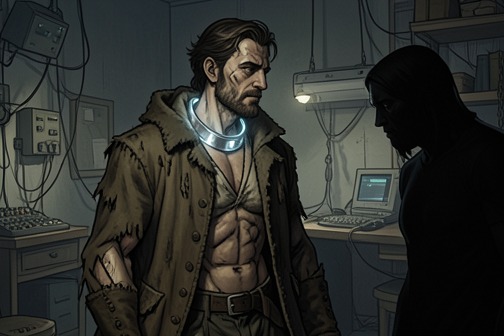
[Alvar’s Enslavement by the Fe Collar](entity:event-recall-event-alvar-s-enslavement-by-b7f4187cec73) is the event that converts Alvar from an isolated [Cursed](entity:creature-recall-creature-cursed-d3440a3389c8) survivor seeking acceptance into [Saul](entity:character-recall-character-saul-115eb7cce44d)’s magically controlled instrument. The collar is presented as a possible cure for his transformations, but its forged bond gives Saul command over Alvar’s body and choices. Its consequences reach far beyond captivity: villages burn, innocent people die, Alvar’s loved ones suffer, and the shame of compelled violence becomes central to his later confession and attempt to free [Underland](entity:location-recall-location-underland-0ae5be63779d).
## The Promise of a Cure
The enslavement begins with Alvar’s longing for a home. After his family rejected him for carrying the Curse, he was vulnerable to anyone who offered belonging. Saul exploited that need by allowing [Ysta](entity:character-recall-character-ysta-7f304f3159fb) to pose as a wife and by presenting the collar as a way for Alvar to control his own life. Ysta explained that the silver collar would draw the Curse from him whenever it tried to manifest, and Saul promised that Alvar would eventually inherit everything he possessed. The proposed remedy therefore carries two promises at once: mastery over a frightening body and acceptance into a family.
Ysta’s workshop makes the supposed cure visibly sinister. Beneath the manor house, she works in a candlelit room marked with sorceress symbols, blood-smeared drawings, bottles, cages, and preserved human and animal parts. She requires Alvar’s blood to be poured into liquid silver so that the finished object will be bound to him. The blood is not merely an ingredient in treatment; it is the material through which ownership is established. Saul’s blood is also added before Alvar’s, creating the hidden link that will allow Saul to control the collar’s wearer.
## Forging and Binding
Ysta produces a beautiful silver collar set with rare gems, together with a key. Alvar places the cold metal around his neck himself, expecting its magic to work immediately. When nothing happens, disappointment replaces hope. Saul then gives him the key and instructs him to lock the collar, claiming that it must recognize itself as bound to Alvar. The instruction is the trap’s final mechanical step.
When Alvar turns the key, the collar produces a burning sensation unlike anything he has known, despite his immunity to flames. His body changes without his consent: he transforms from man to Cursed and then back to man. The apparent treatment has become a mechanism of command. Alvar realizes that his body is no longer his own and that he has become a slave to Saul’s will. Freedom, which the collar had promised, changes in an instant into bodily dispossession.
Saul then reveals that Ysta was never his wife and that the marriage was a ruse designed to make Alvar trust him. Saul wanted a weapon capable of killing or terrorizing others because ordinary means could not kill a Cursed, and he understood that Alvar’s refusal to harm human beings could be manipulated through coercion. Saul admits that Alvar’s ancient bloodline, once revered as godlike in [Axus](entity:location-recall-location-axus-0853a94a7e47), made him especially valuable. The collar’s key remains with Saul, and no one except Saul can remove it. The object therefore combines magical limitation with political power: one small key determines whether Alvar can inhabit his own body freely.
## The Weapon and Its Human Cost
Once bound, Alvar is forced to participate in Saul’s conquest. In one devastated town, he cannot rid himself of the taste of innocent blood; every man there is dead except one. Saul orders the survivor to spread news of the massacre and to tell other villages that submission will spare their lives. Burning homes and bodies in the streets turn Alvar’s enslavement into an instrument of public terror. Saul uses the violence not only to destroy communities but also to recruit through fear, making Alvar’s Cursed form part of a campaign of domination.
The collar also deepens the tragedy of Alvar’s personal relationships. Alvar later explains that Saul made him perform acts he would never have chosen, including sexual acts, and that Saul used him in ways Alvar could not bear to remember. Alvar erased those memories from the Mystar so he would never have to see them again, while retaining other memories of evil committed by Saul’s command as a form of self-punishment. This distinction is crucial to the event’s moral structure. Alvar was the visible instrument of violence, but Saul controlled the instrument; Alvar nevertheless continues to assign himself blame for having trusted Saul and for failing to prevent the harm.
The collar’s consequences also intersect with Alvar’s earlier life. His [Cursed blood](entity:state-recall-state-cursed-blood-b48c0883d199) had once saved [Lucy Hammond](entity:character-recall-character-lucy-hammond-a91e8c60688a) before her birth, after her mother promised that Lucy would become Alvar’s [Earth](entity:location-recall-location-earth-a6b883af9147)-human bride in exchange for the healing. Yet Alvar’s relationship with Cursed blood is not only restorative. He believes that [Triss](entity:character-recall-character-triss-cdadfd79d101) died because he caused her pregnancy without understanding the dangers of a Cursed pregnancy, and a physician later identifies the condition as a magical problem brought on by a dark Curse. The same blood that can heal Lucy can endanger pregnancies, mark Alvar as monstrous, and become valuable to sorcerers and tyrants. The collar weaponizes this already conflicted bodily inheritance.
## Recognition and Public Confession
The event is eventually reframed when Alvar tells the people of Underland that he is the monster Saul used to enslave them. He states that he was himself enslaved by Saul and that, although he was the instrument of Saul’s death-dealing, he had no choice. He explains that his family cast him out as a young boy after discovering the Curse, that Saul found him and saw an opportunity, and that Saul placed the [Fe collar](entity:object-recall-object-fe-collar-cdd08575f626) around his neck. He identifies the collar as dark, evil magic: whoever holds its key can control whoever wears it.
This confession does not erase the deaths committed through Alvar. Instead, it separates responsibility without making the suffering disappear. Some listeners rise and insult him, while others restrain the angered people and remain silent. The divided response reflects the unresolved ethics of coerced violence: Alvar is both victim and the face through which the victims remember Saul’s rule. His public disclosure therefore risks the acceptance he has always wanted, but it also becomes the basis for a new political purpose—the use of his Curse to free Underland from the system that enslaved him.
## Significance and Aftermath
Alvar’s Enslavement by the Fe Collar is a reversal built on failed recognition. Alvar mistakes manipulation for kinship, a weapon for a cure, and a promise of inheritance for belonging. Saul, meanwhile, turns family language into a technology of control, exploiting Alvar’s hunger for acceptance before revealing that the promised relationship never existed. The collar’s magic is frightening precisely because its operation is concrete: blood binds the object, the key activates it, and the keyholder commands the body.
The event also explains why Alvar’s later morality cannot be reduced to either innocence or guilt. He caused deaths while under magical compulsion, but he remembers those deaths, suffers shame, and tries to punish himself for his earlier naivety. His confession makes that contradiction explicit rather than resolving it cheaply. The collar remains the physical symbol of Saul’s power, while Alvar’s later decision to reveal its history transforms the meaning of the same body from hidden weapon to testimony. Its decisive aftermath is therefore not only liberation from a device, but the difficult recovery of agency through truth, accountability, and action against the order that made his captivity possible.
Event 8
Saul’s Conquest and Tyranny of Axus
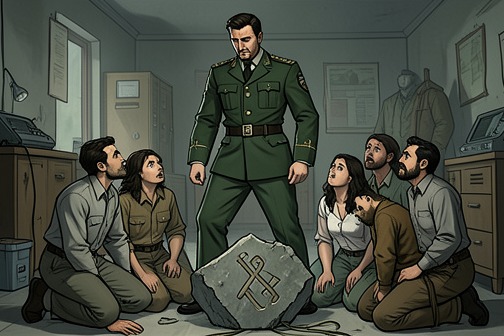
[Saul’s Conquest and Tyranny of Axus](entity:event-recall-event-saul-s-conquest-and-tyr-6e4312af6430) is the period in which [Saul](entity:character-recall-character-saul-115eb7cce44d) converts military authority into personal absolutism, using Alvar as a controlled weapon and presenting himself as the only power that matters. The conquest leaves villages burned, civilians dead, and survivors instructed to spread Saul’s name, while the later exposure of the [Fe collar](entity:object-recall-object-fe-collar-cdd08575f626) reveals how thoroughly his regime depended on stolen agency. His tyranny is therefore both a campaign of territorial domination and a struggle over who can be held responsible for violence committed through another person’s body.
## Origins of Saul’s Power
Saul’s earlier career gives his conquest a military foundation. He recalled serving as a young knight under Umar, king of [Underland](entity:location-recall-location-underland-0ae5be63779d), and receiving a title and enough money to live after saving Umar’s son during a battle against [Ferar](entity:location-recall-location-ferar-b5266bb3ddbc). Saul described the incident with pride: when a gobli sentry charged the prince and the prince froze in fear, Saul killed the sentry before it could take the prince’s head. The story exposes the racialized contempt already embedded in Saul’s worldview: he presented the gobli as vile creatures and treated the killing as proof of his own usefulness and courage.
That older martial identity becomes the basis for a later rule that no longer claims to protect a legitimate sovereign. Saul’s authority expands through fear, while his contempt for other peoples allows violence to be represented as order. The contrast is crucial: the soldier who once served a king becomes a ruler who treats kingship as a personal possession and converts military skill into domination.
## The Machinery of Conquest
Saul’s regime operates through direct command, political manipulation, and the forced use of Alvar. In one of its most consequential schemes, Saul orders Alvar, [Fletch](entity:character-recall-character-fletch-9cc58d19c69f), and [Hyphus](entity:character-recall-character-hyphus-eeb7d1940cd2) to obtain a powerful Memori from a [Sylph](entity:creature-recall-creature-sylph-dce155f8cbe0) temple. Because Saul does not want the theft interpreted as grounds for an attack on Ferar, Hyphus explains that the gobli will be framed for the deed. The plan turns a cultural and religious theft into a manufactured pretext for wider conflict, making scapegoating part of the conquest’s method rather than an accidental consequence.
The palace itself reflects Saul’s fusion of political and religious power. The priests of Hedomas surround the king, and Alvar regards them as corrupt figures who invent prophecies to satisfy their hunger for wealth and influence. Saul gives Hyphus a key with a ruby embedded in its handle as a reward for carrying out the operation, allowing material privilege and sacred authority to reinforce one another. His government thus governs not only through soldiers but through controlled explanations of events: the regime decides who is guilty, which prophecy counts, and what violence will be called necessary.
Saul also regulates bodies and spaces through humiliation. He orders Fletch to be given a bedchamber while sending Alvar to his “hole,” the confinement in which Alvar feels most alone yet paradoxically most at peace. The arrangement places the compliant or useful subject within the palace’s comforts while returning the dangerous subject to a space of isolation. Alvar’s confinement is not merely imprisonment; it is preparation for use, keeping the person who can become a weapon separate from the social world he might otherwise protect.
## Atrocity and Forced Agency
The most devastating evidence of Saul’s tyranny appears in the destruction of a town. Alvar cannot escape the taste of innocent blood, and every man there is dead except one. Saul deliberately leaves the survivor alive and instructs him to tell other villages about the horrors he witnessed, to repeat Saul’s name, and to announce that submission will spare their lives. The massacre therefore has two functions: it destroys the immediate community and becomes a message designed to govern communities that have not yet been attacked. Terror travels ahead of the army as a calculated form of administration.
Saul then grabs a living woman by the hair and drags her toward an empty house, ordering Alvar to keep watch while he speaks with her. Alvar turns away and cries only when Saul is not observing him. His private remorse cannot interrupt the public violence because Saul has made Alvar’s body serve as both weapon and guard. Alvar understands the political consequence with bleak clarity: if Saul succeeds, nothing will remain of [Axus](entity:location-recall-location-axus-0853a94a7e47) when the killing is finished.
The Fe collar makes this arrangement physically enforceable. Saul uses it to restrain Alvar from attacking him or shifting into his more dangerous form, and he can compel Alvar to remain present while atrocities occur. The collar’s power turns coercion into a condition that others may mistake for consent. Later, [Lord Calbir](entity:character-recall-character-lord-calbir-e720630540b9) recounts what happened to his daughter after Saul placed a Fe collar on her: when she was recovered from Saul’s harem after his banishment, there was nothing left of her soul, and she killed herself three months later. Her fate establishes that the collar destroys more than freedom in the moment; its effects persist after formal captivity ends.
## Religion, Monstrosity, and Responsibility
Saul’s political theology is the direct opposite of Alvar’s. When Alvar invokes Elias and calls for Saul’s destruction by fire, Saul answers that there are no gods and declares himself the new god of Axus. This claim makes his tyranny openly theological: political obedience is no longer owed to a king within a sacred order but to Saul as a self-authorized object of worship.
Alvar’s resistance to Saul is also religious and ethical. He secretly worships the God of the Light, whose teaching calls on men to love and respect women and treat them as equals. When a girl begs Alvar to kill her because she believes he wants to eat her, her touch awakens his sexuality, but Alvar withdraws his hands rather than imitate Saul’s lust. He distinguishes himself from Saul by refusing to make desire another form of enslavement. The scene places private restraint against public predation and shows that Alvar’s moral identity survives even when his actions are being commandeered.
Saul’s rule also exploits the category of the [Cursed](entity:creature-recall-creature-cursed-d3440a3389c8). Alvar later admits that his first wife, [Triss](entity:character-recall-character-triss-cdadfd79d101), died because he impregnated her without understanding how Cursed pregnancies worked; he accepts responsibility for that death and researches the condition afterward. He learns from multiple record keepers, including [Father Ryland](entity:character-recall-character-father-ryland-e5be9c9d1623), that a woman possessing [Cursed blood](entity:state-recall-state-cursed-blood-b48c0883d199) would not necessarily die bearing his children, although not all of his children would necessarily be Cursed. These facts complicate the regime’s language of monstrosity by distinguishing inherited bodily risk from moral corruption. Saul, however, uses fear of Alvar’s form and blood to make the body itself evidence of political illegitimacy.
## Collapse and Aftermath
After Saul’s reign, the revelation of the Fe collar becomes central to the question of responsibility. Lord Calbir acknowledges that Saul’s device destroyed his daughter’s capacity for choice, yet another nobleman insists that Alvar has no right to rule because he is Cursed. Alvar does not deny the terror associated with his transformed body. Instead, he warns the population that Saul has remained on [Earth](entity:location-recall-location-earth-a6b883af9147) and grants Calbir permission to destroy him if necessary, handing over his weapon as a symbol of transferred command. He tells Calbir to lead the army against him and to prepare a place of safety without revealing its location.
This surrender of command marks a sharp reversal of Saul’s politics. Saul concentrates authority in himself and hides coercion behind Alvar’s enforced actions; Alvar responds to the possibility of renewed tyranny by making his own destruction an authorized public option. The gesture does not erase the suffering caused while Saul controlled him, but it refuses to preserve power through secrecy. It begins the movement from personal vengeance toward collective protection and institutional accountability.
The final defeat confirms the end of Saul’s regime. After a damaged-room confrontation, [Lucy Hammond](entity:character-recall-character-lucy-hammond-a91e8c60688a) sees the burnt remains of a body and identifies Saul as dead. Alvar’s immediate response is relief, and Lucy declares that it is over forever. Yet the aftermath is not simple liberation. Saul’s guards must remove Lord Vessin to a dungeon after his later assaultive conduct, while Alvar uses his own blood to treat Lucy’s wounds. The contrast places the end of one form of coercive power beside the continuing need to repair bodies and confront abuse.
Saul’s conquest therefore remains present after Saul himself disappears. It survives in the wounds of those subjected to the Fe collar, in the public suspicion directed at Alvar, in the political memory of massacres, and in the religious language used to justify domination. Its decisive narrative function is to force the story to separate appearance from agency: Alvar looks like the monster associated with the violence, but Saul is the will that engineered and exploited it. The destruction of Saul ends the tyrant’s command, while the work of restoring trust, naming responsibility, and deciding who may rule begins only afterward.
Event 9
Execution of Alvar’s Mother
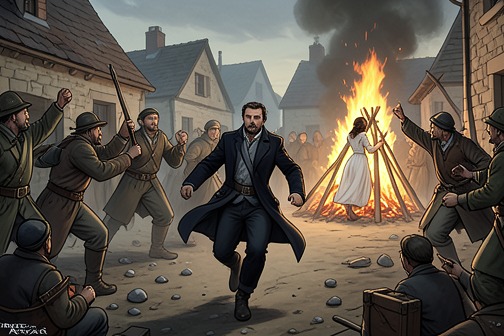
[Execution of Alvar’s Mother](entity:event-recall-event-execution-of-alvar-s-mo-9f3bbe9a4cc7) is the decisive early trauma in Alvar’s history: after his family discovers that he carries [Cursed blood](entity:state-recall-state-cursed-blood-b48c0883d199), his mother is condemned and burned, while Alvar arrives too late to rescue her. The event expels him from his home, fixes his fear that his existence destroys those he loves, and gives his later resistance to [Saul](entity:character-recall-character-saul-115eb7cce44d)’s tyranny a deeply personal origin.
## Discovery and Condemnation
The execution follows the revelation of Alvar’s condition within his family home. Already troubled by his failure to protect the household goats, Alvar tries to tell his parents the truth, knowing that his mother has taught him since childhood that the [Cursed](entity:creature-recall-creature-cursed-d3440a3389c8) are the scourge of [Axus](entity:location-recall-location-axus-0853a94a7e47). His brother Ashtar exposes him when Alvar’s eyes turn red. His mother responds by taking a knife from the chopping block and threatening to kill him and his Cursed demon, while his father calls him Cursed spawn. Alvar flees rather than attack them and transforms into his Cursed form to escape by flight.
The family’s rejection quickly becomes communal violence. After learning that Alvar has been discovered, Ashtar accuses him of killing their mother, even though the villagers themselves are responsible for the coming execution. Alvar denies the charge aloud, but inwardly accepts a more painful version of it: he believes that his existence has made his mother’s death possible. Villagers spit at him, throw objects, draw swords, and deny that he has ever been human. Their response treats inherited or magical difference as proof of monstrosity, turning a family secret into a public sentence.
## The Burning
The villagers burn Alvar’s mother on the Tuesday after his discovery. Although Alvar has already fled, local people carry the news to him. He returns to the execution disguised beneath a stolen priest’s black hood, intending to change forms and save her if necessary. The priests are still chanting when he reaches the site, but the fire has risen as high as the rooftops. All he can see of his mother is a charcoal corpse.
The scene combines religious ritual with irreversible failure. The priests’ chanting frames the killing as sanctioned judgment, while Alvar’s hidden approach shows that he still regards himself as connected to the community he has been expelled from. His arrival too late makes the event more than an execution: it is the collapse of his hope that his abilities can repair every wound. He cannot tell his mother that he is sorry or that he never expected her to love him for what he was, though he still wanted her to be free.
## Burial and Exile
When Ashtar shouts that Alvar killed their mother, Alvar answers that the family and villagers killed her. Yet the accusation penetrates him, producing a knot of guilt that he cannot dismiss. As the crowd calls him Cursed scum, Alvar insists that he will not hurt them and that they are his people. The villagers reject even that claim of belonging, warning that he will bring destruction upon them.
Alvar then chooses an act of mourning and defiance. Rather than fly away and abandon the pyre, he changes into his Cursed form, dives into the flames, and takes his mother’s corpse in his claws. He declares that he will bury her if the crowd will not. Ashtar threatens to spit on her grave, but Alvar carries the body away and resolves to place it on a high mountain where no one can spit on or tread upon it. His motive is not sentimental reconciliation: he acknowledges that his mother did not love him, yet she carried and gave birth to him, and he will honor her with a proper grave before leaving for the south, where no one knows his face or nature.
This burial marks Alvar’s first deliberate separation from his former world. Exile is imposed on him through violence, but he gives it ethical shape by refusing to let the crowd define his mother’s remains or his final duty toward her. The Cursed form that terrifies the villagers becomes, in this moment, the means by which Alvar protects the dead and preserves a fragment of familial dignity.
## Lasting Consequences
The execution establishes the pattern that governs Alvar’s later life: others interpret his body as a threat, while Alvar struggles to distinguish what he is forced to do from what he chooses. Years later, Saul exploits precisely this vulnerability by placing a [Fe collar](entity:object-recall-object-fe-collar-cdd08575f626) on him and controlling his transformations and actions. Alvar is made to participate in violence he would not freely choose, including the aftermath of a massacre in which every man in a town but one is dead, yet he continues to treat himself as morally contaminated. His later confession explains that his family cast him out while he was young and that Saul saw his Curse as an instrument for power.
The memory also shapes Alvar’s understanding of love, reproduction, and responsibility. He later admits that [Triss](entity:character-recall-character-triss-cdadfd79d101) died because he impregnated her without understanding how Cursed pregnancies worked, and he calls her death his fault. After researching the condition with multiple record keepers, including [Father Ryland](entity:character-recall-character-father-ryland-e5be9c9d1623), he concludes that [Lucy Hammond](entity:character-recall-character-lucy-hammond-a91e8c60688a) would not die from bearing his children, though he remains uncertain whether all their children would be Cursed. The earlier execution therefore echoes through his fear that his blood destroys the people who accept him, even when later knowledge offers a possibility of healing that his childhood lacked.
Alvar’s shame is intensified by the fact that he cannot simply discard the past. He has erased memories of Saul’s sexual abuse from the Mystar because he could not bear to revisit them, while retaining other memories of evil committed under coercion as a form of self-punishment. His reluctance to revisit memories of Triss similarly reflects a conflict between mourning and the need to begin a new life. The execution of his mother is the earliest and most absolute version of that conflict: he cannot save the dead, but he can decide whether hatred or honor will govern what he does next.
## Narrative Significance
The event is a descent rather than a conventional heroic initiation. Alvar’s separation from home does not begin with a chosen adventure or a mentor’s summons; it begins with bodily exposure, family betrayal, ritualized killing, and the destruction of his place among his own people. His later return to public life reverses the community’s judgment. When he finally tells [Underland](entity:location-recall-location-underland-0ae5be63779d) that he is the monster Saul used to enslave, he identifies himself as both the instrument of Saul’s death-dealing and a captive who had no choice. That confession makes the childhood execution part of a larger struggle over who has the authority to name a person a monster.
The event also clarifies why Alvar’s later use of his Curse can become liberating rather than merely destructive. As a child, he flies from the villagers but returns to the flames for his mother. As an adult, he publicly exposes the Fe collar and his history in order to help free Underland. In both cases, the stigmatized body is turned against the order that condemns or controls it. The mother’s burning remains the wound at the center of that transformation: Alvar’s first failure to save someone he loved becomes the memory through which he measures guilt, duty, resistance, and the possibility of redemption.
Event 10
Death of Queen Triss
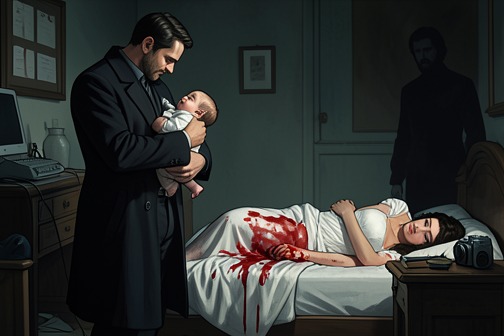
[Death of Queen Triss](entity:event-recall-event-death-of-queen-triss-749c7bfc2628) is the central tragedy of Alvar’s early reign and the event that turns his [Cursed](entity:creature-recall-creature-cursed-d3440a3389c8) nature from a private burden into a source of irreversible loss. [Triss](entity:character-recall-character-triss-cdadfd79d101), Alvar’s first queen, died while pregnant, together with their unborn child, after the pregnancy’s magical complications overwhelmed her body. Her death became the wound around which Alvar built his guilt, his fear of intimacy, and his later insistence that Lucy would not suffer the same fate.
## Background and Marriage
Triss became Alvar’s wife after the war ended, when Alvar was appointed king. Their marriage lasted only a single year before tragedy struck. The kingdom remembered her not merely as a former queen but as a beloved figure whose death, along with the death of her baby, left Alvar and the whole kingdom in mourning. [Grey](entity:character-recall-character-grey-b078e5522afa) later identifies her to Lucy as Alvar’s first queen and explains that she died during pregnancy, revealing a part of the king’s history that Alvar had never told Lucy himself.
The circumstances of Triss’s pregnancy are connected to the difference between ordinary human bodies and [Cursed blood](entity:state-recall-state-cursed-blood-b48c0883d199). Triss had no Cursed blood, while Alvar carried the Curse. Alvar later admits that he did not understand how a Cursed pregnancy worked when he and Triss conceived their child. The danger was therefore not presented as an ordinary pregnancy complication alone: the physician recognizes that something magical and dark is consuming Triss’s strength, while the unborn child’s development becomes fatal to its human host.
## The Pregnancy and Death
The crisis unfolds through waiting, medical uncertainty, and the steady collapse of hope. A physician eventually approaches Alvar with the grim assessment that nothing can be done. The condition is described as abnormal and magical, brought on by a dark Curse rather than by a familiar pregnancy difficulty. Triss is already sallow and drained of life when Alvar enters the room they shared, and the baby is portrayed as eating away at her system because the Curse does not tolerate an average human host.
Alvar responds by promising that he will find a way to save her. He kneels beside the bed and holds her cold hands, trying to convert love into treatment through sheer determination. Triss, however, understands the situation differently. She tells him not to blame himself and suggests that he has already saved her, turning the language of rescue away from physical survival and toward the love and acceptance they shared. Her words provide emotional consolation, but they do not prevent her death or the loss of the child.
The event is therefore both a medical catastrophe and a crisis of interpretation. Alvar’s healing abilities had once saved Lucy while she was still in her mother’s womb, and his people possess powers capable of causing healing. Yet those powers cannot reverse the reproductive danger created when Cursed blood enters an ordinary human pregnancy. The contrast makes Triss’s death especially important: healing exists in this world, but it is neither universal nor sufficient to cancel the bodily limits imposed by the Curse.
## Alvar’s Guilt and Later Revelation
Alvar eventually accepts direct responsibility for Triss’s death. He tells Lucy that Triss died because of him, explaining that she had not carried even a drop of Cursed blood and that he destroyed her by getting her pregnant. He calls himself a fool for not knowing how Cursed pregnancies functioned. His confession does not erase the coercive and supernatural forces involved, but it shows how completely he has internalized the loss as a personal moral failure.
That guilt shapes Alvar’s conduct long after Triss’s death. He keeps the history of his first marriage from Lucy, allowing her to discover that he is a widower through Grey rather than through the king himself. The omission is not treated as simple forgetfulness: Lucy is shocked that Alvar has concealed both his wife and his child, while Alvar’s later explanation reveals how deeply shame and grief have organized his silence. His inability to speak about Triss becomes part of the emotional distance surrounding his relationship with Lucy.
Alvar also researches the danger so that the tragedy will not be repeated. He consults multiple record keepers, including [Father Ryland](entity:character-recall-character-father-ryland-e5be9c9d1623), described as the kingdom’s greatest keeper of magical secrets, and concludes that Lucy would not die from bearing his children. He remains uncertain whether every child would be Cursed, but he now understands that the reproductive risk differs according to the mother’s condition. The research becomes a belated attempt to transform grief into knowledge and to make future love safer than his first marriage had been.
## Political and Ethical Consequences
Triss’s death complicates Alvar’s position as king because it joins private bereavement to dynastic expectation. [Underland](entity:location-recall-location-underland-0ae5be63779d) places severe importance on tradition, honor, respect, and lineage, and a monarch’s marriage and heirs are therefore political matters as well as intimate ones. Her death removes the queen and the expected child in the same stroke, leaving Alvar to carry both the kingdom’s mourning and the implications of a damaged succession.
The tragedy also becomes part of the larger question of whether Alvar is a person afflicted by a condition or a monster defined by it. Alvar later describes himself as a scourge to everyone he loves and fears that there is nothing good inside him. That self-condemnation exists alongside evidence that he has repeatedly been treated as less than human: his family rejected him after discovering the Curse, [Saul](entity:character-recall-character-saul-115eb7cce44d) enslaved him with a [Fe collar](entity:object-recall-object-fe-collar-cdd08575f626), and Saul forced him to commit violence. The death of Triss is different because Alvar regards it as an intimate failure that occurred before he understood the danger, yet the resulting guilt makes him interpret his condition as proof of inherent evil.
His later public confession preserves this moral tension. Alvar tells Underland that he was enslaved by Saul and that his actions under the Fe collar were not freely chosen, but he does not use coercion to make himself innocent of every consequence. Triss’s death remains the private precedent behind his fear that those closest to him will pay for the Curse. The event thus separates responsibility from simple intention: Alvar did not knowingly seek Triss’s death, but he continues to bear its memory as if love itself had become a form of danger.
## Narrative Significance and Legacy
Death of Queen Triss functions as the backstory that explains Alvar’s guardedness, his resistance to trust, and his urgency when Lucy’s life is threatened. It is also a repeated counterpoint to Lucy’s survival. Alvar once saved Lucy through his Cursed blood when she was dying in the womb, and later gives her his Cursed blood again when she is near death. The same blood that is associated with Triss’s fatal pregnancy is therefore also associated with rescue, making the Curse morally and medically unstable rather than simply evil.
The event’s deepest significance lies in the way it changes the meaning of Alvar’s future relationships. Triss’s death does not remain a closed historical fact; it returns whenever pregnancy, healing, blood, or the possibility of heirs is discussed. Alvar’s love for Lucy is shadowed by the memory of a queen he could not save, while his research and later attempts to protect Lucy show him trying to interrupt the pattern. Triss’s final reassurance that Alvar had already saved her cannot undo the loss, but it prevents the tragedy from being reduced entirely to destruction. Her death becomes the source of Alvar’s shame and caution, yet also the reason he seeks knowledge, accepts the burden of explanation, and acts to keep the woman he loves alive.
Event 11
Saul’s First Defeat and Exile Through the Bridge
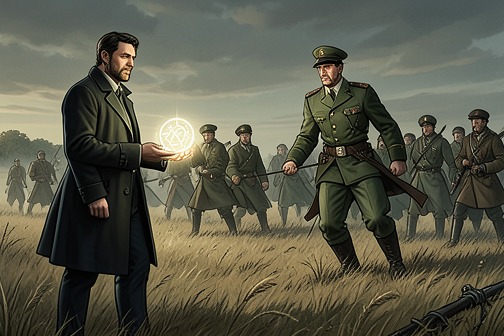
[Saul’s First Defeat and Exile Through the Bridge](entity:event-recall-event-saul-s-first-defeat-and-a047acd91256) is the decisive but incomplete victory over [Saul](entity:character-recall-character-saul-115eb7cce44d)’s rule of [Axus](entity:location-recall-location-axus-0853a94a7e47). Alvar succeeds in forcing the tyrant through the Bridge and into [Lucy Hammond](entity:character-recall-character-lucy-hammond-a91e8c60688a)’s world, yet the act functions as exile rather than annihilation. Saul’s continued existence on [Earth](entity:location-recall-location-earth-a6b883af9147) leaves the realms of Axus and Earth vulnerable, while Alvar must live with the knowledge that the weapon used to defeat Saul also made him part of Saul’s crimes.
## Causes and Background
The defeat grows out of Saul’s domination of Axus and his use of coercive magic. Saul placed a [Fe collar](entity:object-recall-object-fe-collar-cdd08575f626) on Alvar, and the device made Alvar a slave to Saul’s will. Once the collar was activated, Alvar could no longer control his own body; he transformed from man to [Cursed](entity:creature-recall-creature-cursed-d3440a3389c8) and back again while Saul used him as an instrument of violence. The collar therefore turned Alvar’s body into a political weapon, binding the future king’s identity to the machinery of Saul’s tyranny.
The consequences of that enslavement were catastrophic. Alvar remembers the taste of innocent blood and the destruction of a town in which every man but one was killed. Saul left the survivor alive to spread his name and warn other villages that submission would purchase safety. Burning homes and bodies in the streets made Saul’s authority visible as terror, while Alvar’s forced participation left a moral wound that outlasted Saul’s immediate reign.
Saul’s ideology intensified the threat. He rejected the existence of gods and presented himself as the new god of Axus, replacing religious and communal order with personal absolutism. His violence was not merely private cruelty; it was a method of government. The account of the [Star Wheel](entity:object-recall-object-star-wheel-f856c9d1117b), on which [Gobli](entity:creature-recall-creature-gobli-b7dd0ac07ede) criminals were torn apart limb by limb before decapitation, shows the wider culture of exemplary punishment associated with the world Saul helped shape. [Fletch](entity:character-recall-character-fletch-9cc58d19c69f) later explains that Saul enslaved [Goblia](entity:location-recall-location-goblia-951d9724eb1b)’s people in his mines and installed [Remora](entity:character-recall-character-remora-8b4867a49865) as queen, enabling the return of an extreme hive order in which female infants were destroyed unless Remora chose one to become a princess.
## Course of the Exile
Alvar’s method of defeating Saul was to throw him through the Bridge into Earth. Alvar explains that this was the only available means of overcoming him: without arlite, Saul could not return. [The Bridge](entity:location-recall-location-the-bridge-dd983998e080) thus becomes more than a passage between worlds. It is a strategic boundary, a prison door, and a temporary substitute for a final victory. Saul is removed from Axus, but the danger is displaced rather than resolved.
The exile changes the political balance immediately. With Saul absent, Alvar can rule, but he cannot regard the victory as secure. He knows that Saul may return, and that such a return could destroy both Axus and Earth. The triumph of banishment therefore contains its own reversal: the tyrant has been defeated, yet the conditions of his eventual return remain imaginable. The event’s value shift moves from oppression toward liberation, then back toward threatened uncertainty.
Alvar’s personal relation to the event is inseparable from shame. He tells Lucy Hammond that he is the Cursed Saul used to gain power and admits that, before becoming ruler, he did unforgivable things. He insists that the acts occurred outside his control because the Fe collar controlled him, but he does not treat that explanation as emotional absolution. The collar remains, invisibly blessed by a sylph priestess, as a daily reminder that he was enslaved. Exile therefore saves Axus while leaving Alvar unable to experience victory as innocence restored.
## Political and Personal Aftermath
The threat returns to public life when Fletch reports that Queen Remora plans to attack Earth and that Gobli spies have discovered the Bridge and are assessing Earth’s defenses. The report makes Saul’s exile newly dangerous. If Remora’s attack succeeds, Saul could return when his prison sentence ends. Alvar’s earlier triumph consequently becomes the source of a continuing strategic emergency rather than a closed chapter.
Alvar responds to this prospect with despair. In the [Underland Palace](entity:location-recall-location-underland-palace-d04e0c248d75) conference room, he remembers the hope and triumph that followed Saul’s banishment, but now longs for death and cannot be killed. He fears ruling people who will always despise him and wonders whether he will eventually become feral like other Cursed beings condemned to live for eternity. His inability to die transforms the aftermath of exile into an existential punishment: Saul is confined elsewhere, while Alvar remains permanently exposed to memory, judgment, and the possibility of renewed possession.
The event also determines Alvar’s later attempt to build a future rather than merely defend the past. Sola tells him that [Hannah Delaney](entity:character-recall-character-hannah-delaney-7404d4ea4727) carries a child who is dying and that he must cross the Bridge while it remains open, infusing the unborn child with [Cursed blood](entity:state-recall-state-cursed-blood-b48c0883d199) so [Father Ryland](entity:character-recall-character-father-ryland-e5be9c9d1623) can use healing magic to save it. She presents the journey as the beginning of Alvar’s marriage and heirs, but Alvar refuses the prospect of remarriage because he fears killing another woman. His refusal shows how the first defeat has shaped his understanding of power: survival and dynastic continuity no longer appear as uncomplicated rewards when every intimate bond may become vulnerable to the curse and its violence.
## Later Revelation and Final Resolution
The political meaning of Saul’s exile is revisited when Alvar publicly reveals that he is a Cursed. [Lord Calbir](entity:character-recall-character-lord-calbir-e720630540b9) recalls that Saul placed a Fe collar on Calbir’s daughter and that, after she was recovered from Saul’s harem, her soul had been destroyed by actions performed without choice. She killed herself three months later. Calbir’s testimony creates a public parallel between his daughter’s suffering and Alvar’s enslavement, giving social language to the distinction between voluntary atrocity and forced action.
The revelation does not produce immediate universal forgiveness. A nobleman argues that Alvar’s Cursed identity makes him unfit to rule and claims that his flying in the skies above [Underland City](entity:location-recall-location-underland-city-0f548abeb759) had terrorized the people. Alvar nevertheless accepts the possibility that his own subjects may destroy him. When Lord Calbir offers to lead the army against him, Alvar grants permission without flinching and gives Calbir his weapon as a symbol of the transfer of command. He warns that Saul may have lost some skill while imprisoned on Earth, but he does not ask the people to trust him blindly; he tells them to find safety, keep its location from him, and prepare for battle.
Saul’s first defeat finally becomes complete only when Lucy Hammond sees the burnt remains of a body and identifies Saul as dead. Alvar’s response is relief, and Lucy declares that it is over forever. This later death closes the uncertainty created by the Bridge exile, converting provisional imprisonment into destruction. Yet the earlier banishment remains crucial because it bought the time in which resistance, confession, and preparation became possible.
## Narrative Significance
The event is a hybrid of escape, pursuit, and sacrifice rather than a simple heroic triumph. Alvar acts as the threshold figure who expels the tyrant across the boundary between Axus and Earth, but he cannot return unchanged: the crossing saves his kingdom while preserving the evidence of his own coerced participation in its suffering. The Bridge’s function is therefore structurally double. It carries Saul away from power and later becomes the route through which Alvar’s future, including his connection with Hannah Delaney and Lucy Hammond, can be formed.
The exile also establishes the book’s central contrast between punishment and restoration. Saul’s rule treats bodies as instruments, populations as material to be terrorized, and political order as personal ownership. Alvar’s response gradually moves toward warning, consent, public accountability, and institutional succession. Even after Saul’s death, Lord Vessin argues that [Underland](entity:location-recall-location-underland-0ae5be63779d) must forge a weapon capable of killing a Cursed so that the kingdom will never again be defenseless. The first defeat thus does not erase the need for political safeguards; it teaches the survivors that defeating a tyrant is only the beginning of rebuilding a world that can resist his return.
Event 12
Remora’s Coup and the Collapse of Goblia
[Remora’s Coup and the Collapse of Goblia](entity:event-recall-event-remora-s-coup-and-the-c-e4d2fe0d1bf7) marks the destruction of [Remora](entity:character-recall-character-remora-8b4867a49865)’s regime and the physical collapse of [Goblia](entity:location-recall-location-goblia-951d9724eb1b), transforming Alvar’s campaign from a threatened rescue into a wider struggle for political liberation. The event joins military strategy, interspecies alliance, mass death, and the exposure of the violent systems that had shaped [Axus](entity:location-recall-location-axus-0853a94a7e47) under [Saul](entity:character-recall-character-saul-115eb7cce44d) and Remora.
## Causes and Political Background
The immediate cause is Remora’s violation of a critical treaty with Alvar and with Axus as a whole. After one of her agents abducts [Lucy Hammond](entity:character-recall-character-lucy-hammond-a91e8c60688a), Remora intends to send Alvar’s bride back to [Earth](entity:location-recall-location-earth-a6b883af9147), treating her removal as both a personal insult and a political challenge. Alvar publicly declares that he will dethrone Remora and help establish a new gobli ruler of [Ferar](entity:location-recall-location-ferar-b5266bb3ddbc). His announcement turns Lucy’s abduction into a broader issue of sovereignty: Remora is no longer merely an opposing queen but a ruler whose actions threaten treaty obligations and the political balance of Axus.
The conflict also grows from Remora’s treatment of other peoples. The stog report that Remora’s forces have hunted and killed members of their population while denying them the right to live on the mountain’s surface. Their proposed alliance with [Underland](entity:location-recall-location-underland-0ae5be63779d) is therefore conditional on an end to the genocide. Alvar accepts their support and recognizes that their fighters, together with sympathetic gobli, can change the balance against Remora. The resistance is built not only on loyalty to a king but on communities seeking survival after persecution.
## Military Coalition and Assault
The campaign initially appears difficult because Goblia has only one heavily guarded entrance. Alvar identifies the problem as the central tactical obstacle, while the gobli of the mountain encampment reveal that resistance spies have cut a second passage into the city from the opposite side. This secret road makes a coordinated assault possible. The plan is to draw the gobli fighters toward the main entrance and attack from behind, concentrating the campaign on the removal of Remora as the head of the regime.
The alliance is given a public and almost ceremonial form when the encampment welcomes Alvar with applause and chants of “[AYA-ALVAR](entity:expression-recall-expression-aya-alvar-eaa48ae11001), AYA-ALVAR.” The gathering includes gobli from the mountain settlement and stog emerging from the surrounding forests. Unlike the more deformed gobli encountered in the depths of Goblia, the surface gobli are described as warty, well-proportioned, and kindly, and they wear shaded spectacles to endure sunlight. Their position outside the caves parallels Lucy Hammond’s own earlier displacement from Earth: both groups are understood as living outside their natural element. That recognition gives the military coalition an emotional dimension beyond strategy.
Alvar’s campaign also carries the burden of the violence associated with Goblia. The gobli execution custom involves criminals being placed on a [Star Wheel](entity:object-recall-object-star-wheel-f856c9d1117b), where their limbs are pulled off one at a time before the head. The practice supplies a concrete image of the brutal legal order the conflict confronts. Against that background, Alvar’s intention to “cut the head off the monster” is both a battlefield metaphor and a direct attempt to end a regime whose authority has been maintained through terror.
## Collapse and Immediate Aftermath
Goblia does not fall through a clean transfer of power. After the assault, the caverns collapse, and the destruction is attributed to Remora’s mass suicide with explosives. Remora chooses to die at her own hands while bringing her people into the catastrophe rather than accept defeat by a stronger enemy. Alvar explains that, according to her sense of honor, self-inflicted death with her people was preferable to being vanquished; she knew that her forces were outnumbered and overpowered.
The collapse produces both victory and uncertainty. Lucy Hammond wakes after the escape and learns that the caverns have fallen, immediately asking whether Alvar, [Leeza](entity:character-recall-character-leeza-593bfac68eb3), [Grey](entity:character-recall-character-grey-b078e5522afa), and [Fletch](entity:character-recall-character-fletch-9cc58d19c69f) survived. [Emily Hall](entity:character-recall-character-emily-hall-24560d2db105) reports that Alvar rescued as many people as he could before the collapse and confirms that the others escaped alive. The event therefore preserves the possibility of a political future while leaving Goblia itself buried and many of its inhabitants dead. Remora’s defeat is inseparable from the destruction of the society she ruled.
## Consequences for Axus
The fall of Remora makes alliance-building central to the emerging order. Alvar’s promise to help the gobli establish a new ruler and his acceptance of the stog demand suggest a coalition-based alternative to the isolated and coercive rule represented by Remora and Saul. Yet the aftermath does not erase the legacy of tyranny. [Lord Calbir](entity:character-recall-character-lord-calbir-e720630540b9) later recalls that Saul placed a [Fe collar](entity:object-recall-object-fe-collar-cdd08575f626) on his daughter and that, after her release, nothing remained of her soul; she died by suicide three months later. This testimony places Remora’s collapse within a longer history of magical enslavement, political terror, and damaged survivors.
Alvar’s response to that history differs from simple revenge. When nobles question whether a [Cursed](entity:creature-recall-creature-cursed-d3440a3389c8) has the right to rule, he offers Lord Calbir his weapon and grants permission for the people to destroy him if necessary. He asks the population to find safety and prepare without revealing the location to him, accepting the possibility that his own body may again be used to kill others. The gesture establishes a pattern of responsibility and self-sacrifice that contrasts with Remora’s decision to destroy her people rather than surrender.
The event’s ultimate consequence is confirmed later when Lucy reports that Saul is dead. The burned remains of Saul’s body are found after the final confrontation, and his death is treated as the end of his power. Remora’s collapse thus becomes one part of a larger destruction of the regimes that had organized Axus through captivity, inherited fear, execution, and the denial of personal autonomy.
## Narrative Significance
Remora’s Coup and the Collapse of Goblia combines the master plots of pursuit, rescue, rebellion, and escape. Lucy’s abduction supplies the immediate rescue stake, while the stog and gobli turn a private crisis into a collective revolt. The secret passage and the attack from two directions give the episode the shape of a strategic reversal: a fortress that appears closed from the front has already been opened from within.
The event also complicates the idea of liberation. Alvar wins because oppressed groups join his campaign, but victory arrives through collapse, explosives, and mass death rather than orderly restoration. The narrative refuses to separate political renewal from the ruins left by the old order. Goblia’s destruction removes Remora, yet it cannot restore those killed by her policies or undo the trauma associated with the Star Wheel, the Fe collar, and Saul’s rule. In that sense, the event is both a military triumph and a warning that dethroning a tyrant is only the beginning of rebuilding a world after tyranny.
Event 13
Lucy’s Return to Axus
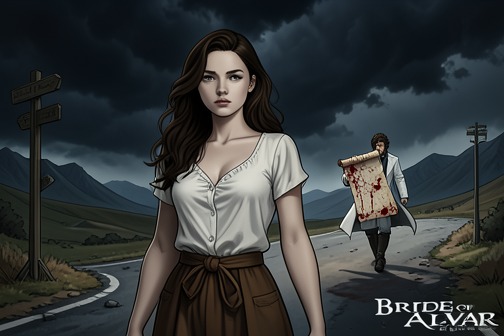
[Lucy’s Return to Axus](entity:event-recall-event-lucy-s-return-to-axus-6085ddcf526d) marks the moment when Lucy chooses [Axus](entity:location-recall-location-axus-0853a94a7e47), Alvar, and an uncertain magical world over the safe identity she had built on [Earth](entity:location-recall-location-earth-a6b883af9147). The journey begins after she learns that Emily is dead and that Emily’s blood-written message identified Lucy’s blood as the key. It ends with Lucy crossing the Bridge once more, recognizing her own power, and running toward the fires of Axus while [Saul](entity:character-recall-character-saul-115eb7cce44d) is already exploiting Alvar.
## Causes and Background
Lucy’s return is prepared by a crisis of identity that has been developing since childhood. As a girl, she revealed her mother’s secret to Emily, only to hear Emily call her mother a liar and regard Lucy’s belief as evidence of something deeply wrong. Lucy consequently understood herself as isolated from the ordinary world, an island separated from everyone else by her mother’s insanity and her own credulity. As an adult, she tried to reverse that inheritance by pursuing a quiet life with [Mike Jones](entity:character-recall-character-mike-jones-7b35e9cb845a). Mike’s proposal seemed to offer an escape from what Lucy called “Looney-town,” and their relationship promised stability, friendship, and a conventional family life.
That arrangement collapses when Lucy recognizes that she does not want Mike Jones as a lover. She wants him as a friend, and therefore understands that marriage to him would be false. Her attraction to Alvar exposes the difference between comfort and desire, but Alvar initially interprets their possible union as an arrangement based on wealth, power, political usefulness, and mutual advantage. He tells Lucy that he is rich, powerful, and a just ruler who could give her anything she wanted. Lucy rejects the implication that her choice could be reduced to material gain.
The deeper obstacle is Alvar’s trauma. He describes himself as a damaged [Cursed](entity:creature-recall-creature-cursed-d3440a3389c8) shell after Saul forced him to perform sexual acts against his will and used him as an instrument of domination. Alvar had erased the worst memories from the Mystar because he could not bear to preserve memories of Saul degrading him. His mother’s fate gives that trauma a still more brutal history: after Alvar’s [Cursed blood](entity:state-recall-state-cursed-blood-b48c0883d199) was discovered, priests burned her, and Alvar arrived too late to save her, seeing only her charcoal corpse. His knowledge of violence is therefore both personal and political, while the [Star Wheel](entity:object-recall-object-star-wheel-f856c9d1117b), on which criminals are torn apart limb by limb before decapitation, reveals the public savagery embedded in the societies surrounding him.
## The Earthward Interruption
Lucy’s separation from Axus does not restore the ordinary life she once imagined. On Earth, Mike Jones becomes the witness to a story that sounds like madness until the [Arlite](entity:object-recall-object-arlite-157a7d48c940) responds. Lucy first tries to use the necklace by closing her eyes and picturing Axus and [Underland](entity:location-recall-location-underland-0ae5be63779d), but nothing happens. Remembering how Alvar had used the crystal during their first crossing, she lifts it to her forehead. The crystal begins to glow, visibly changing Mike Jones’s and Angie’s expressions.
The glowing Arlite turns private conviction into observable fact. Mike Jones understands that Lucy’s account is not the ravings of a madwoman and accepts that she belongs with the person who made her passionate in a way she had never been with him. His acceptance gives Lucy the goodbye she had wanted: he releases her without pretending that their comfortable friendship was romantic love. Lucy embraces the crystal, thinks of home, and crosses the Bridge in a flash of white light.
## Crossing the Bridge
The second crossing repeats the physical pattern of Lucy’s first journey while reversing its meaning. She lands in a soft patch of grass in the same field where she first arrived with Alvar, but she is again dressed as an Earth woman and feels visibly out of place in the magical world. This time, however, displacement no longer proves helplessness. Lucy realizes that she herself is magical and that the power she had associated with Alvar had been present in her all along.
That recognition changes the return from a passive rescue into a self-directed act. Lucy concludes that Alvar had not needed to send her away to protect her and that she could have saved him immediately. The thought is not merely retrospective confidence: it gives her a new responsibility. She has crossed the boundary between worlds by her own will, and the return places the consequences of Axus’s conflict directly before her.
## Arrival Under Threat
Lucy’s homecoming is not peaceful. As soon as she breathes Axus’s air, she notices smoke and sees an amber glow over the horizon. The fires indicate that Saul is already using Alvar. Instead of waiting for transport or seeking shelter, Lucy rises and runs toward the danger. She finds the road rather than continuing through fields or jungle, then encounters a wagon pulled by a large jungle cat and draws her gun when she approaches it.
The arrival therefore turns the value of home from safety into obligation. Lucy has returned to the place she longs for, but Axus is burning, Alvar is endangered, and the welcome is immediately shadowed by an ominous voice from the wagon. [The Bridge](entity:location-recall-location-the-bridge-dd983998e080) has not carried her into a settled domestic ending; it has delivered her into the next confrontation.
## Consequences and Significance
Lucy’s Return to Axus completes a major reversal in her relationship with Mike Jones and Alvar. Mike Jones represents stability without passion, while Alvar represents passion joined to danger, trauma, political responsibility, and an uncertain future. Lucy’s decision to cross does not erase the costs of choosing Alvar, but it establishes that she is no longer making the choice because another person commands or protects her. She acts after recognizing what she wants and what her abilities may allow her to do.
The event also binds personal love to public crisis. Alvar’s history includes enslavement, sexual coercion, the execution of his mother, and the stigma attached to the Cursed. [Lord Calbir](entity:character-recall-character-lord-calbir-e720630540b9) later confirms the destructive power of the [Fe collar](entity:object-recall-object-fe-collar-cdd08575f626) by describing how Saul placed one on his daughter, whose will and soul were devastated before she died by suicide. These revelations make Lucy’s return part of a larger struggle over bodily autonomy, political legitimacy, and the possibility of repairing a society shaped by Saul’s rule.
The return’s emotional consequences continue after Lucy reaches Axus. After Lord Vessin’s attempted assault, Lucy remains haunted by his leering gaze and asks Alvar to stay beside her. Alvar promises to remain with her until proper security can be established, then holds her while she falls asleep. In this aftermath, the crossing’s meaning becomes fully relational: Lucy has returned not only to a place but to a chosen bond, while Alvar’s presence offers the safety that neither Earth’s conventional stability nor Axus’s institutions had previously secured.
Event 14
Restoration of Alvar as King of Underland
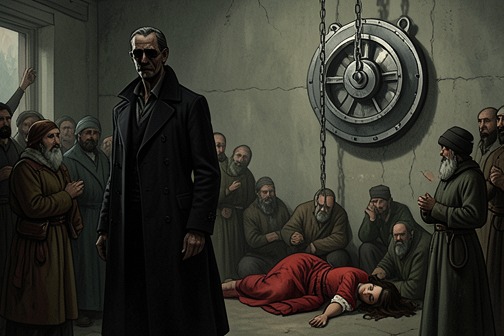
## Causes and Political Background
The restoration follows a crisis of legitimacy rooted in Alvar’s concealed identity and in the damage left by [Saul](entity:character-recall-character-saul-115eb7cce44d)’s reign. Alvar had once been bound to Saul’s power through the [Fe collar](entity:object-recall-object-fe-collar-cdd08575f626), a device capable of forcing its wearer to act without meaningful choice. [Lord Calbir](entity:character-recall-character-lord-calbir-e720630540b9)’s testimony gives that history a human cost: Saul placed a Fe collar on Calbir’s daughter, and when she returned from Saul’s harem, her soul had been so damaged that she killed herself three months later. This testimony separates Alvar’s compelled violence from Saul’s tyranny while also explaining why the realm remains terrified of magical domination.
The assembly must also reckon with the violence of the surrounding societies. [Gobli](entity:creature-recall-creature-gobli-b7dd0ac07ede) execution is described as criminals being torn apart on the [Star Wheel](entity:object-recall-object-star-wheel-f856c9d1117b), with their limbs removed one at a time before the head. [Goblia](entity:location-recall-location-goblia-951d9724eb1b)’s political order has likewise been reshaped into a hereditary hive system under [Remora](entity:character-recall-character-remora-8b4867a49865): most male drones die in infancy, female offspring are destroyed unless selected as a future princess, and Remora lays about ten eggs each week. [Fletch](entity:character-recall-character-fletch-9cc58d19c69f) explains that Saul installed Remora as queen after enslaving Gobli workers in his mines, suggesting that the restoration of [Underland](entity:location-recall-location-underland-0ae5be63779d)’s government occurs within a wider struggle to undo institutions created or strengthened by Saul.
Alvar’s connection to [Earth](entity:location-recall-location-earth-a6b883af9147) is itself founded on political exchange and bodily obligation. [Hannah Delaney](entity:character-recall-character-hannah-delaney-7404d4ea4727) promised her unborn daughter to Alvar in return for healing when the child was expected to die in the womb. The written agreement, sworn under Elias on October 10, 1993, and on the twenty-third day of [Havath](entity:time-recall-time-havath-a286f09ca258), 2918, betrothed the female child to King Alvar as his future wife and queen in order to secure peace between Earth and [Axus](entity:location-recall-location-axus-0853a94a7e47). Alvar later explains that [Cursed blood](entity:state-recall-state-cursed-blood-b48c0883d199) was infused into Lucy before birth to save her life and that her survival made her, as far as he knew, the only person on Earth able to bear his children without dying. The restoration therefore develops out of a political order that has repeatedly treated marriage, healing, reproduction, and sovereignty as interconnected resources.
## The Public Argument for Restoration
Lucy’s speech supplies the decisive popular and moral case. She asks the people to remember what happened after Alvar banished Saul: peace settled over the land, homes and towns were rebuilt, and communities recovered the lives stolen by conquest. Her argument does not ask the assembly to abandon its belief that the [Cursed](entity:creature-recall-creature-cursed-d3440a3389c8) are dangerous. Instead, she asks it to judge Alvar by what he has done for Underland and by what he can still do against enemies who seek to destroy the peace.
Lucy presents Alvar as a ruler whose strength has been repeatedly used without his Cursed form becoming the instrument of domination his opponents fear. She recalls that he helped lead victory against Remora without using that form to command respect, helped rebuild homes, made peace with other peoples, and restored the freedom to live without Saul’s control. His appointment of local leaders becomes evidence that he trusted the goodness and judgment of the people rather than keeping every authority for himself. In Lucy’s formulation, Alvar’s power is not merely a threat; it is also the force capable of protecting Underland and liberating oppressed people across Axus.
The appeal gains institutional support when Lord Calbir rises, places an arm across his chest, bows to Lucy, and declares that he has always loved Alvar as king and will continue serving him if Alvar remains on the throne. The gesture turns private loyalty into a public act. It also follows Calbir’s earlier willingness to accept command from Alvar even after learning the truth: Alvar granted Calbir permission to destroy him, handed over his weapon as a symbol of transferred command, and instructed him to lead the army against Saul while preparing a place of safety that Alvar himself would not know.
## Opposition, Succession, and Terms of Rule
Lord Vessin remains the principal voice of resistance. He argues that Alvar’s children must not inherit the Cursed condition and calls a Cursed unpredictable and vulnerable to corruption. His objection exposes the succession problem beneath the immediate vote: restoring Alvar means deciding not only who rules now, but whether the monarchy can survive into a future generation without reproducing the danger associated with Alvar’s body.
Sola answers this concern by appearing at Lucy’s meeting as ruler of the [Skylands](entity:location-recall-location-skylands-353f6026ab7b) and pledging allegiance to Lucy and Alvar as Underland’s respected rulers. She predicts that the couple will have two children, one like Lucy and one like Alvar, with Alvar’s red eyes. Her statement makes their future family part of the political settlement rather than a private matter. Sola further explains that, according to tradition, an heir will be judged by the council at the age of twenty-five to determine whether that heir is worthy to succeed the royal couple. The succession system therefore places a formal limit on hereditary certainty: royal birth does not by itself guarantee the throne.
Sola also gives the restoration a predictive endorsement. She tells Vessin that Alvar has ruled for years without exploiting his Cursed state even though he could have done so, and that what she sees in the future offers no reason to fear his resumption of royal duties. Vessin softens only conditionally. He accepts the restoration because he trusts Sola’s prediction about the couple’s children, while still demanding that a weapon be forged capable of killing a Cursed so that Underland will never again be defenseless. The settlement thus combines recognition with surveillance and future preparedness rather than offering unconditional confidence.
## The Decision and Its Consequences
Lord Calbir eventually asks who supports taking Alvar and Lucy as king and queen once again. Vessin admits that he may dislike the decision but accepts Sola’s testimony, and the meeting ends with only a few dissenters. The outcome is therefore not a unanimous conversion of belief. It is a majority-backed restoration in which practical security, remembered service, prophetic assurance, and the authority of respected leaders overcome continuing religious and political suspicion.
The decision restores Lucy alongside Alvar, making her public advocacy part of her queenship rather than a private defense of her husband. She speaks as someone who knows the suffering of Underland but also as someone whose own body has long been used as a treaty instrument: her mother promised her before birth, Alvar’s healing preserved her life, and her potential children are treated as evidence of dynastic stability. By choosing to remain, Lucy reclaims that history as a political commitment. She later tells Alvar that she cannot return to Earth because he is not there, because she loves Axus and Underland, and because she wants to see the realm prosper and have his children.
The restoration does not produce immediate safety. Lucy leaves the meeting with the good news but senses that something is wrong. The danger is soon embodied by Vessin’s attempted assault, after which guards remove him to a dungeon. Alvar treats Lucy’s physical injuries with his blood, but the aftermath acknowledges that healing the body does not automatically repair the violation or the accumulated trauma of Saul’s rule. The restored monarchy therefore begins under the pressure of unresolved violence, disciplinary responsibility, and the need to distinguish protection from control.
## Narrative and Thematic Significance
The event reverses the usual logic of a succession crisis. Alvar is not restored because his identity is disproved or because his Cursed nature is made harmless; he is restored while that identity remains true. Lucy’s argument instead changes the standard of judgment from inherited stigma to demonstrated conduct, though the demand for a weapon against Cursed beings shows that the old fear has not vanished. The kingdom accepts a dangerous ruler as a necessary protector while attempting to preserve institutional safeguards against the danger it believes he represents.
The episode also shifts Underland from personal retaliation toward public reconstruction. Saul’s rule is remembered through enslavement, forced action, destroyed families, and the death of Calbir’s daughter, while Alvar’s legitimacy is associated with banishment of the tyrant, rebuilding, peace, and restored freedom. Yet Alvar’s own history complicates any simple distinction between victim and sovereign. He once used power under coercion, later reveals the truth, and accepts the possibility that his people may have to kill him. His restoration consequently carries the shape of a conditional reconciliation: the ruler is recognized not as innocent of the realm’s terror, but as someone who acknowledges the terror and offers his authority back to the people.
The event completes a return without restoring the old order unchanged. Alvar and Lucy resume the throne, but succession is subject to council judgment, opposition remains politically visible, and the realm intends to develop defenses against its own king’s kind. Their return is therefore both a coronation of memory and a test of whether power can be made answerable after tyranny. The few dissenters, Vessin’s continuing hostility, Sola’s prophecy, and Lucy’s decision to stay all ensure that the restoration is presented as a beginning: a precarious attempt to build legitimate rule from a history in which marriage, magic, violence, and survival have never been separable.
Event 15
Lord Vessin’s Attempted Assault on Queen Lucy
[Lord Vessin’s Attempted Assault on Queen Lucy](entity:event-recall-event-lord-vessin-s-attempted-2331da008367) is a pivotal act of political and sexual violence in which Lord Vessin attacks Lucy not merely as an individual but as Alvar’s queen and the bearer of a contested succession. His stated aim is to force a pregnancy that would produce an [Underland](entity:location-recall-location-underland-0ae5be63779d) human heir, replacing the royal line associated with Alvar’s [Cursed blood](entity:state-recall-state-cursed-blood-b48c0883d199). The episode therefore joins attempted assault, dynastic conspiracy, and the persecution of a stigmatized body in one concentrated crisis.
## Causes and Political Background
Lucy’s vulnerability is rooted in the arrangement that made her Alvar’s bride. Her mother explains that Alvar required an [Earth](entity:location-recall-location-earth-a6b883af9147)-human bride to preserve peace between Earth and [Axus](entity:location-recall-location-axus-0853a94a7e47), and that she had promised Lucy to him after Alvar’s Cursed blood saved Lucy’s life before birth. The agreement names Lucy alone as Alvar’s future queen; rejecting it would be treated as an insult to Alvar and his people and could provoke war, which Lucy’s mother believes Earth would lose. Lucy’s marriage is thus presented as diplomacy before it becomes a personal relationship, leaving her body entangled with the security of two worlds.
The marriage also carries immediate coercive pressures. When [Remora](entity:character-recall-character-remora-8b4867a49865) threatens Emily’s life, Alvar tells Lucy that sealing their marriage will make the killing of Earth humans a crime against Underland and give him grounds to order Emily’s release. Lucy agrees to marry him to save her friend while explicitly refusing sexual relations. Alvar accepts that boundary but says they must spend the night together to create the appearance that he is treating her as his wife, because an old law requires the royal couple to observe this public marital form. Her consent is therefore repeatedly narrowed by diplomacy, hostage-taking, law, and the threat of war, even before Vessin turns succession politics into a direct assault.
A further source of tension is Alvar’s [Cursed](entity:creature-recall-creature-cursed-d3440a3389c8) inheritance. He acknowledges that Queen [Triss](entity:character-recall-character-triss-cdadfd79d101) died after he impregnated her, because she had no Cursed blood and he did not understand the dangers of a Cursed pregnancy. He later says that research and multiple records, including information from [Father Ryland](entity:character-recall-character-father-ryland-e5be9c9d1623), have convinced him that Lucy would not die bearing his children, although he cannot know whether every child would be Cursed. This uncertainty makes reproduction a matter of both medical danger and dynastic legitimacy. Vessin exploits the fear surrounding Cursed heirs by presenting a child born from non-Cursed seed as the answer to Underland’s succession problem.
## The Assault and Conspiracy
The attack begins when Lucy walks alone through a hallway toward Alvar’s quarters. She notices that [Grey](entity:character-recall-character-grey-b078e5522afa), who had been watching over her, is absent. Just before she reaches Alvar’s door, someone seizes her wrist from behind and drags her to the floor. Vessin muffles her struggle and claims that his own child will make Sola’s prophecy irrelevant, revealing that the assault is connected to a larger expectation about the royal succession.
Vessin makes his objective explicit: because Lucy is married to Alvar, he believes that impregnating her with his child could put that child on the throne instead of Alvar’s. He emphasizes that the child would not come from Cursed seed. His language reduces Lucy to a dynastic vessel while also revealing his hostility toward Alvar’s bloodline. The proposed pregnancy is not an act of private desire; it is the mechanism of an attempted succession coup, using sexual violence to manufacture a rival heir.
Vessin further relies on status and impunity. He tells Lucy that access and power would allow him to assault her repeatedly, and that the event could be concealed because public knowledge would be treated as weakness in the queen’s representative. He also says he has bribed her guard. Grey’s absence is consequently not an accident but part of the conspiracy. When Vessin orders Grey to help restrain Lucy, Grey refuses to intervene against Vessin directly but declares that Lucy must submit because she married a Cursed king and Underland cannot have a Cursed heir. His response shows that the assault is enabled not only by one aggressor but by a belief system that treats Lucy’s reproductive choice as subordinate to dynastic prejudice.
Lucy resists throughout the attack. Although Vessin is larger and stronger, she uses the moment when he releases one hand to undo his belt, thrusts her hands beneath herself, bucks him off, and runs despite being bloodied and bruised from the struggle and the tiled floor. Her resistance prevents the conspiracy from achieving its immediate reproductive goal and keeps the event from becoming a completed assault, but it does not erase the institutional betrayal surrounding it.
## Alvar’s Intervention and the Choice of Justice
Lucy reaches for help and sees Grey, but Vessin overpowers her again and pins her wrists to the floor. Grey tells Vessin that he must hold her himself, then tells Lucy that she must go with Vessin because a Cursed heir cannot be allowed. Lucy is consequently abandoned by a guard entrusted with her safety at the very moment that the palace’s succession ideology is being enforced through physical restraint.
The confrontation changes when the door is broken open and Alvar appears. He is already moving toward his Cursed form, and he threatens Vessin with death at the hands of a Cursed. Vessin’s earlier confidence collapses into terror when he faces the power he had tried to displace. The scene reverses the apparent power structure: the queen is no longer isolated, the conspirator is no longer protected by access and bribery, and Alvar’s stigmatized identity becomes the source of immediate protection.
Alvar initially insists that Vessin deserves to die, and his blood-red eyes remain fixed on the anguished lord. Lucy interrupts the impulse by stating that Vessin had not killed her. Alvar then accepts a trial and orders [Leeza](entity:character-recall-character-leeza-593bfac68eb3) to bring the guards. When Lucy adds that Grey was involved, Alvar is shocked and releases Vessin from his choking grip. The decision matters because it separates justice from uncontrolled vengeance: Alvar’s rage is real, but the attack becomes a prosecutable conspiracy rather than an execution carried out in the heat of transformation.
## Consequences and Aftermath
The aftermath confirms that Vessin acted from a personal vendetta rather than as the representative of an organized palace-wide movement. Grey apologizes and is sentenced to prison for his betrayal, with permanent exile from the palace. Vessin refuses to speak and dies by suicide before sentencing, leaving a note that he would rather die than serve a Cursed household. His death prevents a judicial reckoning, but the note makes his motive unmistakable: his opposition is directed at the prospect of a Cursed royal household and the legitimacy of Alvar’s rule.
The attack changes Lucy’s practical security. Alvar assigns her a new personal guard, a seven-foot-tall [Stog](entity:creature-recall-creature-stog-e7d510c4fe80) male with antlers, black-and-red fur, and broad shoulders, and gives her five additional guards to accompany her. Leeza remains loyal and becomes a trusted friend, helping Lucy navigate Underland customs as well as her personal needs. These arrangements do not undo Lucy’s fear, but they acknowledge that the palace failed to protect her and that safety must be rebuilt through different relationships.
The event also forces Lucy to reconsider whether she wants to remain in Axus. During the crisis, she longs to return to Earth, imagining it as a place where people would not want to rape or kill her because she is Alvar’s wife. After Vessin’s imprisonment and Grey’s punishment, however, she remains in Axus. She and Alvar stay at his ocean-side castle, with peaked turrets, whimsical staircases, tropical gardens, and colorful exotic birds, and she becomes comfortable with the decision to stay despite recognizing that Axus contains greater danger. Her continued residence is not a denial of the violence she endured; it follows the exposure and punishment of those who betrayed her and the restoration of a measure of protection.
## Significance
Lord Vessin’s Attempted Assault on Queen Lucy reveals the most coercive underside of the marriage that initially appears to be a peace treaty. Lucy’s identity as Earth’s promised bride, Alvar’s wife, and Underland’s queen gives her political importance while making her body a target. Vessin’s plan turns the rules of lineage into an excuse for rape, while Grey’s compliance demonstrates how prejudice can function as ordinary institutional reasoning rather than as a private aberration.
The event also reverses the meaning of the Cursed identity. Vessin and Grey treat Alvar’s blood as contamination that must be excluded from the throne; Alvar’s arrival shows that the same identity can become the force that defends Lucy. Yet the scene does not simply celebrate violent protection. Alvar’s transformation brings him to the edge of killing, while Lucy’s testimony redirects him toward trial. Her agency therefore survives in two forms: first through physical resistance to Vessin, and then through her power to shape the response to the attack. The attempted coup fails not only because Alvar is stronger, but because Lucy refuses to become the silent instrument of a succession system that seeks to decide her future through force.
Event 16
Lucy and Alvar’s Recognition of Their Love
[Lucy and Alvar’s Recognition of Their Love](entity:event-recall-event-lucy-and-alvar-s-recogn-58dae8c42202) is the turning point at which a marriage created to preserve peace becomes an intimate bond freely affirmed by both partners. Lucy had entered the arrangement under extraordinary pressure: her mother, Emily’s threatened death, the [Earth](entity:location-recall-location-earth-a6b883af9147)–[Axus](entity:location-recall-location-axus-0853a94a7e47) political agreement, and Alvar’s warning that refusing the role of his chosen bride could provoke war. Yet the relationship’s meaning changes when Lucy distinguishes between obligation and desire, accepts Alvar as her husband without reducing him to his title or power, and later identifies their marriage as one of love rather than duty or political cause.
## Causes and Background
Lucy’s original emotional refuge was [Mike Jones](entity:character-recall-character-mike-jones-7b35e9cb845a), her college fiancé and the promise of a stable life outside the chaos of her childhood. She understood that their relationship was a comfortable friendship rather than a passionate love affair, but stability was precisely what she believed she wanted. The revelation that her mother had promised her to Alvar as an Earth-human bride transformed that private arrangement into an international obligation. According to her mother, Alvar needed Lucy to preserve peace between Axus and Earth, and rejecting the agreement could be treated as an insult serious enough to lead to war.
The marriage therefore begins under coercive conditions rather than romantic freedom. Alvar uses the institution of marriage to protect Emily from execution and to prevent further danger to Earth humans, while Lucy agrees to marry him in order to save her friend. She explicitly refuses sexual intimacy at first, and Alvar accepts that boundary while explaining that he must spend the night with her to satisfy an old [Underland](entity:location-recall-location-underland-0ae5be63779d) law and make the marriage appear legitimate to the rest of Axus. The arrangement is consequently marked by a persistent contradiction: Lucy’s public role is that of queen and wife, but her private consent remains uncertain and guarded.
Alvar initially reinforces the transactional character of the relationship. He presents himself as wealthy, powerful, and just, arguing that he can give Lucy anything she wants and suggesting that her attraction to him is already evident. Later, when Lucy asks whether he wants children with her, he insists that he could name a successor who was not his biological child and says that he wants her to be free. He describes himself as ruined by [Saul](entity:character-recall-character-saul-115eb7cce44d) and as nothing more than a [Cursed](entity:creature-recall-creature-cursed-d3440a3389c8) shell of a human being, revealing that he has interpreted their marriage as a business arrangement rather than as a bond in which he could be loved.
## What Happens
The recognition develops through bodily intimacy but is completed through explicit emotional and ethical affirmation. In the cabin, Lucy and Alvar consummate their relationship after Lucy tells him, “I love you,” and Alvar does not assume that physical desire alone constitutes consent. Instead, he kneels, takes her hand, and asks whether she truly wants him as her husband in this way. Lucy answers by affirming that she wants him as her husband, turning the scene from compelled marital performance into a chosen union.
Lucy then rejects the hierarchy that has defined Alvar’s self-image. She tells him that they are equals and that she wants “everything you are,” including the Curse and the painful past he believes disqualify him from love. Her promise that he does not have to remain alone directly confronts his expectation of rejection. Alvar responds not by claiming possession but by proceeding with the tenderness he has promised, taking his time and covering her body with kisses. The scene’s decisive shift is therefore not simply that the couple has sex; it is that desire is placed inside mutual recognition, permission, vulnerability, and care.
The cabin briefly gives their new relationship a private world apart from kingship, war, and inherited law. Alvar explains that it is his own cabin, not a stranger’s house, and wishes that they could remain there and never face another dark day. Lucy shares the wish, even as both understand that Saul’s return makes such peace temporary. Their happiness is real, but it exists under the pressure of an approaching political crisis, which prevents the consummation from functioning as a simple escape from the larger plot.
## Consequences and Aftermath
After returning to Underland, Lucy’s commitment becomes a matter of identity and residence rather than only romance. She tells her mother that she is not going back to Earth because her home is with Alvar. Alvar supports her decision, but he also insists on separating her from her mother for safety: Lucy is his wife and the key to saving Axus, while her mother must be evacuated because the danger in Axus cannot be allowed to compromise her security. Lucy’s decision to remain is thus both a declaration of love and an acceptance of political responsibility.
The relationship also changes how Lucy understands her own past choices. Mike Jones had represented a fresh start and a safe, manageable future, but when Lucy tells him the truth about what has happened, he recognizes that she was never passionate with him in the same way. He accepts that she belongs with the person who awakened that passion. His response closes the most important alternative to Lucy and Alvar’s union without turning Mike into a rival who must be defeated: the stable relationship Lucy once chose as an escape is revealed as emotionally insufficient for the life she now wants.
The recognition is later given a quieter, restorative form during the couple’s trip to the ocean. Away from immediate danger, Lucy has time alone with her husband and understands the journey as a healing experience. The setting functions as a temporary honeymoon, but its importance lies less in luxury than in recovery: after coercion, captivity, political fear, and Alvar’s shame, the couple can inhabit their marriage as a shared present. Lucy’s happiness at calling Alvar her husband confirms that the title has changed meaning for her.
## Meaning and Significance
The event converts the novel’s central marriage trope from externally imposed duty into mutual choice without erasing the coercion that preceded it. Lucy never forgets that the marriage was originally connected to war, Emily’s survival, and the safety of two worlds. Instead, the later declaration of love establishes a new foundation that the original treaty could not provide. Political necessity may bring the couple together, but it cannot by itself create the emotional equality Lucy demands.
For Alvar, Lucy’s acceptance challenges the identity imposed on him by Saul and the Curse. He expects his history to make him incapable of goodness and believes that loving Lucy would ruin her. Lucy answers through both speech and action: she refuses to participate in a performance of love while withholding herself, but she also refuses to let trauma define the limits of what Alvar can become. Her compassion does not merely comfort him; it recognizes the peace and restoration he has made possible in Axus and treats those achievements as evidence of his moral agency.
The event’s final significance is captured by the contrast between the marriage’s beginning and its later state. At first Lucy is promised to Alvar by her mother, threatened by the possibility of war, and prepared to sacrifice her own desires to save Emily. By the ocean, she understands that their marriage is no longer one of duty or political cause but one of love. The royal honeymoon is therefore not an ornamental aftermath; it is the narrative proof that a relationship born as an instrument of diplomacy has become the home Lucy once thought she could find only with a regular Earth man.